
Why do some hair transplants look completely natural, while others appear artificial or “pluggy”?
The answer lies in a single critical factor: how single- and multi-hair grafts are used during the procedure.
If you are considering a hair transplant, understanding this concept will help you make an informed decision and avoid unnatural results. In this comprehensive guide, you’ll learn how graft types, density planning, and surgical techniques work together to create a natural-looking hairline and long-lasting results.
Table of Contents
What Is a Hair Graft?
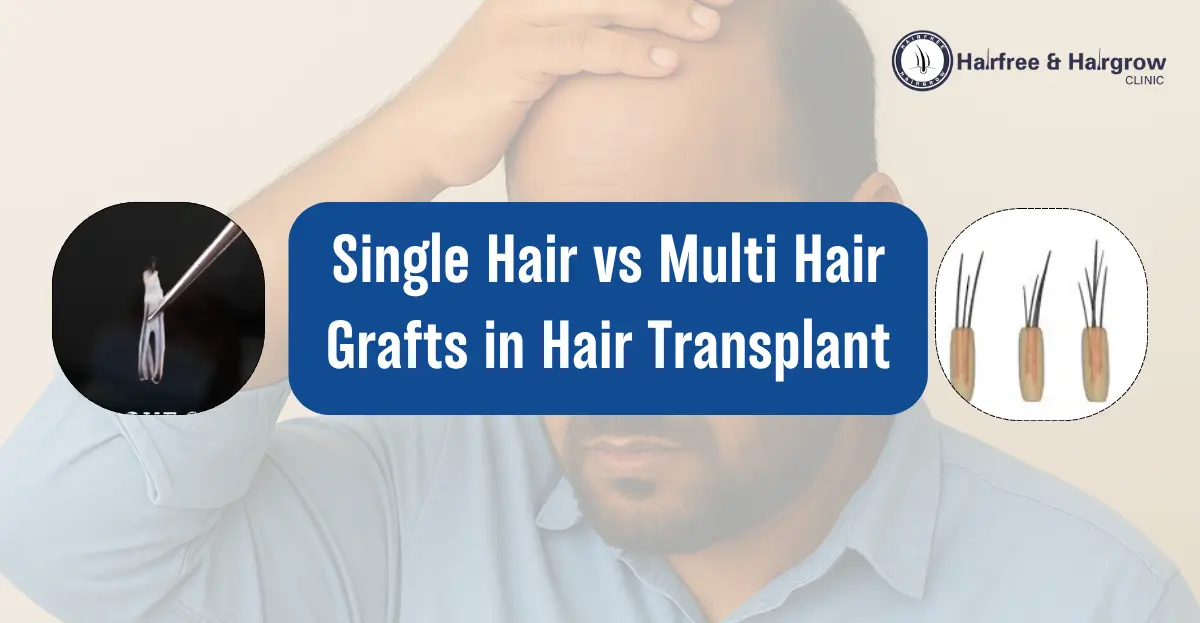
A hair graft is a naturally occurring group of hair follicles, known as a follicular unit. These units typically contain:
- 1 hair (single graft)
- 2 hairs
- 3-4 hairs (multi-hair grafts)
Modern procedures like Follicular Unit Extraction (FUE) and Follicular Unit Transplantation (FUT) transplant these natural groupings, not individual hairs, to replicate how hair grows naturally.
Single Hair Grafts vs. Multi-Hair Grafts
What Are Single Hair Grafts?
Single hair grafts contain one hair follicle and are primarily used to design the front hairline.
Why They Are Important:
- Create a soft, natural-looking hairline
- Mimic natural hair growth patterns
- Prevent the “pluggy” or artificial look
The front hairline in natural hair is never dense; it’s made of fine, single hairs that gradually transition into thicker areas.
What Are Multi-Hair Grafts?
Multi-hair grafts contain 2, 3, or 4 hairs per unit and are used to build density and volume.
Types:
- 2-hair grafts: Used in the transition zone behind the hairline
- 3–4 hair grafts: Used in mid-scalp and crown for maximum density
Why They Matter:
- Provide fuller coverage
- Create the illusion of thick hair
- Reduce the number of grafts needed
The Secret to Natural Hair Transplants
The most natural results come from strategic blending, not just the number of grafts.
Ideal Graft Placement Strategy:
- Hairline (front): Single hair grafts
- Transition zone: 2 hair grafts
- Mid-scalp & crown: 3-4 hair grafts
Using multi-hair grafts in the front can result in an unnatural, harsh hairline. Using only single grafts everywhere leads to poor density.
The key is balance and precision.
Why Graft Density Planning Is Critical
A successful hair transplant is not just a medical procedure; it is a combination of science and artistry.
1. Creating the Illusion of Density
Since donor hair is limited, surgeons must create the appearance of fullness, not replicate every lost hair.
- Multi-hair grafts block light from reflecting off the scalp.
- Proper placement makes hair appear thicker than it actually is.
2. Protecting the Donor Area
Over-harvesting can lead to:
- Visible thinning at the back of the head
- Permanent aesthetic damage
A skilled surgeon calculates the optimal graft distribution to balance coverage and preservation.
How Surgeons Decide Between Single and Multi-Hair Grafts
Every patient is unique. Surgeons perform a detailed assessment before planning the procedure.
Microscopic Scalp Analysis
Doctors examine follicular units using magnification tools to determine the following:
- Natural graft composition (1 vs. multi-hair ratio)
- Donor area strength
Hair Characteristics
Several factors influence graft strategy:
- Hair thickness: Thick hair gives better coverage.
- Hair color vs. skin tone: High contrast requires more density.
- Hair texture: Curly hair provides better coverage than straight hair.
Hair Loss Pattern
The extent of baldness determines:
- Total graft requirement
- Distribution of single vs multi-hair grafts
Hair Transplant Techniques: FUE vs FUT
Follicular Unit Extraction (FUE)
- Individual grafts are extracted one by one.
- Minimal scarring (tiny dots)
- Allows precise selection of graft types
Follicular Unit Transplantation (FUT)
- A strip of scalp is removed and dissected into grafts.
- Can yield a higher number of grafts in one session
- Leaves a linear scar (usually hidden by hair)
Both techniques rely on accurate placement of single and multi-hair grafts for natural results.
Hair Transplant Results and Recovery Timeline
Weeks 1–2: Healing Phase
- Scabs form and fall off within 7–10 days.
- Mild redness and swelling subside
Weeks 3–8: Shedding Phase
- Transplanted hairs fall out (normal process)
- Follicles remain intact under the skin.
Months 3–6: Early Growth
- New hair starts growing
- Around 40–50% visible growth
Months 9–12: Final Results
- Hair thickens and matures
- Full density becomes visible
Post-Transplant Care and Maintenance
To protect your results:
Immediate Care
- Avoid touching or scratching the scalp.
- Sleep with your head elevated
- Follow washing instructions carefully.
Long-Term Maintenance
Doctors may recommend:
- Minoxidil to stimulate growth
- Finasteride to prevent further hair loss
- PRP therapy for scalp health
A healthy lifestyle and proper nutrition also support long-term results.
Why Choose Hairfree & Hairgrow Hair Transplant Clinic Bangladesh for Your Hair Transplant?
Choosing the right clinic is the most important decision in your hair restoration journey. Even with advanced techniques like follicular unit extraction and follicular unit transplantation, the final result depends heavily on expertise, planning, and artistic execution.
Here’s why many patients trust Hairfree & Hairgrow Hair Transplant Clinic Bangladesh for natural-looking hair transplant results:
- Expert-led hair transplant procedures
- Advanced FUE & I-FUE techniques
- Personalized treatment planning
- High graft survival rate
- Natural hairline design
- Strict hygiene & safety standards
- Complete aftercare support
- Proven patient results
Frequently Asked Questions
1. Can multi-hair grafts be used in the hairline?
No. This often leads to an unnatural, pluggy appearance.
2. Do single hair grafts grow more slowly?
No. All grafts follow the same growth cycle.
3. How many grafts do I need?
- Mild hair loss: 1,000-1,500 grafts
- Moderate: 2,000-3,000 grafts
- Advanced: 3,500+ grafts
A consultation is required for an accurate estimate.
Final Thoughts
The difference between a natural and artificial hair transplant comes down to precision and planning.
- Single hair grafts create realism.
- Multi-hair grafts create density.
- Strategic placement blends both seamlessly
A well-executed hair transplant should be undetectable even at close range.