
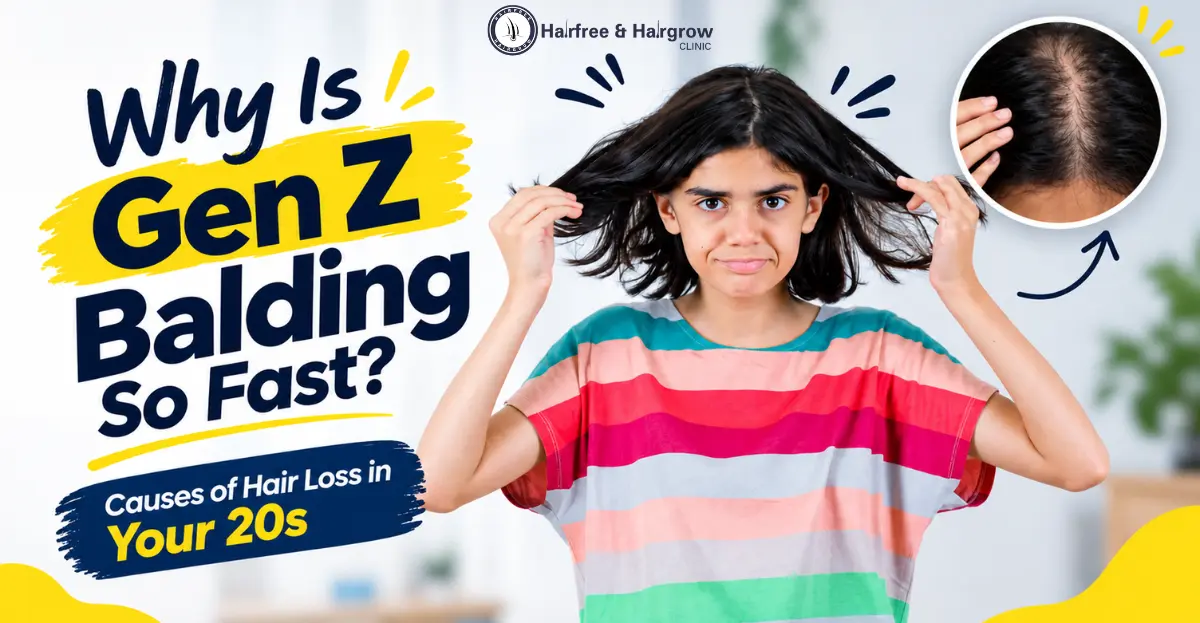
Noticing more hair on your pillow, a widening part, thinning around the crown, or a receding hairline in your 20s can be stressful. But why is Gen Z balding so fast?
The answer isn’t a single modern lifestyle factor. Gen Z hair loss can have several causes, but genetics and androgen-related hair loss are among the most important reasons for early, progressive thinning in young men. Stress, illness, poor nutrition, inadequate sleep, and certain medical conditions can also contribute to temporary or accelerated hair shedding.
If you are losing hair in your 20s, identifying the underlying cause is more useful than simply looking for a quick hair-growth remedy.
Check Your Hair Transplant Cost Instantly
Table of Contents
What Is Gen Z Hair Loss?
“Gen Z hair loss” is not a specific medical diagnosis. It is a term commonly used to describe hair thinning or excessive shedding occurring among people born approximately between the late 1990s and early 2010s.
Hair loss at a young age may appear as:
- A receding hairline
- Thinning at the temples
- Reduced hair density on the crown
- A widening central part
- Increased scalp visibility
- Overall reduction in hair volume
- Excessive shedding during washing or brushing
- Gradual progression toward male pattern baldness
The important point is that not every young person with hair shedding is going bald.
Hair normally goes through cycles of growth, resting, and shedding. A temporary increase in shedding can occur after stress, illness, significant dietary changes, or other triggers.
Progressive thinning, however, may indicate an underlying hair-loss condition that needs evaluation.
Why Is Gen Z Balding So Fast?
No scientific evidence blames one factor, such as smartphones, social media, or modern lifestyles, for Gen Z balding.
Several factors can overlap.
1. Genetics Can Play a Major Role in Gen Z Balding
One of the most common causes of progressive hair loss in young men is androgenetic alopecia, commonly called male pattern hair loss.
Genetic hair loss can begin in the late teens or 20s. In some people, the first noticeable sign is a receding hairline. In others, thinning begins around the crown.
Family history can increase the likelihood, but you don’t need an obviously bald father for genetic hair loss to occur.
Both sides of the family can contribute to genetic susceptibility.
2. DHT and Male Pattern Hair Loss: Dihydrotestosterone (DHT) is an androgen hormone involved in androgenetic hair loss.
Dihydrotestosterone (DHT) is an androgen hormone involved in androgenetic hair loss.
In genetically susceptible hair follicles, DHT-related signalling can gradually cause follicles to become smaller. This process is called follicular miniaturization.
Over time:
Thick terminal hair → progressively finer hair → shorter growth cycle → increased scalp visibility
This is why someone may notice that their hairline is not simply “shedding” but actually becoming progressively thinner.
DHT is therefore an important factor in genetic male pattern baldness, but hair loss is more complex than simply having “too much DHT.”
3. Stress and Hair Loss
Can stress cause early hair loss?
Yes, significant physical or emotional stress can contribute to increased hair shedding.
A common condition associated with stress is telogen effluvium.
Potential triggers include the following:
- Major emotional stress
- High fever or significant illness
- Surgery
- Rapid weight loss
- Severe dietary restriction
- Major lifestyle changes
- Other physical stressors
Stress-related shedding often becomes noticeable weeks to months after the triggering event, not immediately.
The good news is that some forms of stress-related shedding can improve once you address the underlying trigger.
However, stress can also occur alongside genetic hair loss. Therefore, assuming that all hair loss is caused by stress may delay appropriate treatment.
4. Can Poor Sleep Cause Hair Loss?
Poor sleep is often discussed as a possible contributor to hair problems.
Sleep is important for overall health, recovery, and hormonal regulation. Chronic sleep deprivation may also coexist with stress, poor nutrition, and other lifestyle factors.
However, poor sleep alone should not automatically be considered the direct cause of progressive male pattern baldness.
If a young person has a clearly receding hairline or progressive crown thinning, genetic hair loss should also be considered.
Improving sleep is beneficial for general health, but it should not replace an appropriate hair-loss evaluation.
5. Diet and Nutritional Deficiencies
Diet can affect hair health, particularly when nutritional intake is inadequate.
Hair growth requires adequate energy and nutrients. Hair shedding can be associated with deficiencies or inadequate intake of nutrients such as
- Iron
- Protein
- Vitamin B12
- Zinc and other nutrients in appropriate circumstances
Risk may increase with restrictive diets, rapid weight loss, or inadequate overall nutrition.
However, taking supplements without identifying a deficiency is not always helpful and may sometimes be harmful.
If nutritional deficiency is suspected, a healthcare professional may recommend appropriate dietary assessment and, when clinically indicated, blood tests.
6. Rapid Weight Loss and Extreme Dieting
Some young adults try aggressive diets and fasting to lose weight quickly.
Significant calorie restriction or rapid weight loss can trigger increased hair shedding in some individuals.
This can happen because the body prioritizes essential functions when energy and nutrient availability are inadequate.
A balanced diet containing sufficient:
- Protein
- Calories
- Fruits and vegetables
- Whole grains
- Healthy fats
- Essential micronutrients
is important for overall health and normal hair growth.
7. Other Medical Causes of Early Hair Loss
Not all hair loss in your 20s is genetic.
Other possible causes include
- Thyroid disorders
- Certain nutritional deficiencies
- Alopecia areata
- Scalp disorders
- Some medications
- Hormonal conditions
- Recent illness
- Significant physical stress
This is why the pattern, duration, and characteristics of hair loss matter.
For example, sudden patchy hair loss is different from gradual recession at the temples.
How Do You Know If You Are Actually Going Bald?
Early hair loss can be difficult to identify because normal daily shedding can look alarming.
Signs that deserve attention include:
- Your hairline is gradually moving backward.
- The temples are becoming more visible.
- The crown appears thinner.
- Your hair looks progressively finer.
- Your hairstyle no longer provides the same coverage.
- Your scalp is becoming increasingly visible.
- Close relatives have a history of early patterned hair loss.
- Hair density continues to decrease over several months.
A receding hairline in your 20s does not automatically mean you will become completely bald, but progressive changes deserve evaluation.
Why Am I Balding at 20?
If you are asking, “Why am I balding at 20?” genetics is one of the first factors that should be considered.
Male pattern hair loss can start relatively early in susceptible individuals.
But other causes should also be considered, especially when hair loss is
- Sudden
- Diffuse
- Patchy
- Associated with scalp inflammation
- Associated with other symptoms
- Accompanied by substantial shedding
A proper assessment can help determine whether you are experiencing androgenetic alopecia, telogen effluvium, another type of alopecia, or a combination of factors.
Why Am I Balding at 25?
Hair loss at 25 can have many of the same causes.
If you have gradually developed:
Temple recession + thinning crown + finer hair + family history
Then androgenetic alopecia may be a significant possibility.
If instead you suddenly notice substantial shedding throughout the scalp after illness, stress, or rapid weight loss, another cause may be more likely.
The distinction matters because treatment depends on the diagnosis.
Can Early Balding Be Reversed?
This depends on why the hair is being lost and how advanced the process is.
Some types of temporary shedding can improve after the underlying trigger is addressed.
For genetic hair loss, treatment may help slow progression and, in some cases, improve hair density. Earlier evaluation can be useful because miniaturized follicles may be more responsive to treatment than areas where follicles have been inactive for a long period.
However, no treatment can guarantee complete restoration of lost hair.
The appropriate approach depends on age, diagnosis, pattern of hair loss, donor-area condition, medical history, and treatment goals.
How Is Early Hair Loss Evaluated?
A hair-loss consultation should begin with a medical history and examination rather than immediately choosing a treatment.
A clinician may assess:
Hair-loss pattern
Is the loss occurring at the temples, crown, central scalp, or diffusely?
Hair density
How much healthy hair remains in different scalp regions?
Miniaturization
Are individual hairs becoming progressively finer?
Scalp condition
Are there signs of inflammation, scaling, infection, or another scalp disorder?
Family history
Did parents, grandparents, or other relatives experience early hair loss?
Lifestyle and nutrition
Are there recent changes in diet, weight, stress, sleep, or overall health?
Medical history
Have there been recent illnesses, medications, or other health changes?
Depending on the presentation, additional investigations may be recommended.
Treatment for Early Hair Loss
Treatment should be based on the underlying cause.
Depending on the diagnosis, options may include:
1. Medical Treatment
Evidence-based medications may be considered for appropriate patients with androgenetic hair loss.
Some treatments work by prolonging the growth phase of hair or reducing the effects of androgen-related follicle miniaturization.
However, medications are not appropriate for everyone and can have contraindications or side effects. They should be discussed with a qualified medical professional.
2. Correcting Nutritional Deficiencies
If testing or clinical evaluation identifies a nutritional deficiency, correcting that deficiency may help address associated shedding.
This does not mean that taking multiple hair supplements will automatically stop genetic balding.
Supplements should be used when medically appropriate.
3. PRP and Other Hair Restoration Approaches
Platelet-rich plasma (PRP) may be considered in selected cases of hair loss.
Evidence suggests PRP can improve certain hair-density measures in some patients, but outcomes vary, and protocols differ.
It should be viewed as a treatment option, not a guaranteed cure for baldness.
4. Hair Transplantation
A hair transplant may be considered when there is appropriate donor hair and a stable enough pattern of hair loss.
During transplantation, follicles from a donor area are moved to areas with insufficient hair.
Techniques such as FUE can be used depending on the patient’s characteristics and the surgeon’s assessment.
A transplant does not stop the underlying genetic process affecting the remaining native hair. Long-term planning is therefore particularly important for younger patients.
For someone in their early 20s, rushing into surgery without assessing future hair-loss progression may not be the best approach.
How to Protect Your Hair in Your 20s
While you cannot change your genetics, you can support overall hair and scalp health.
Consider:
- Eating a balanced, adequate diet
- Avoiding extreme crash diets
- Getting sufficient sleep
- Managing chronic stress
- Treating scalp conditions appropriately
- Avoiding unnecessary supplements
- Avoiding excessive heat or harsh chemical treatments
- Seeking professional evaluation when thinning is progressive
Most importantly, do not wait until significant hair loss has occurred before asking why it is happening.
Gen Z Hair Loss: What You Shouldn't Assume
Several common misconceptions about early hair loss.
Myth | Reality |
Stress is always the cause. | Stress can trigger shedding, but genetic hair loss is also common. |
Hair loss at 20 means complete baldness. | Early hair loss does not automatically predict complete baldness. |
More shampoo causes baldness. | Shampooing does not usually cause androgenetic alopecia. |
Hair supplements cure genetic baldness. | Supplements help when a relevant deficiency exists; they do not cure genetic hair loss. |
A transplant stops future hair loss. | A transplant restores hair in selected areas but does not necessarily stop native-hair miniaturization. |
Everyone with hair fall needs a transplant. | Many causes of hair shedding do not require surgery. |
When Should You See a Hair-Loss Specialist?
Consider seeking a hair-loss specialist evaluation if you notice:
- Progressive hairline recession
- Increasing crown thinning
- Sudden excessive shedding
- Patchy bald spots
- Persistent scalp itching, redness, or scaling
- Hair loss after significant illness
- Hair loss associated with major weight loss
- A strong family history of early balding
- Hair thinning that continues for several months
Early assessment can help identify the cause and determine whether treatment is appropriate.
Gen Z Hair Loss in Bangladesh: Why Local Evaluation Matters
Young adults in Dhaka may experience the same major categories of hair loss seen worldwide, including genetic hair loss, stress-related shedding, nutritional problems, and medical causes.
However, treatment should be based on the individual patient rather than social media trends or a one-size-fits-all hair-loss routine.
At Hair Free and Hair Grow Bangladesh, patients can discuss their concerns with Dr. Naznin Sultana Nipa and receive an assessment based on their hair-loss pattern, scalp condition, medical history, and treatment goals.
Frequently Asked Questions
Why is Gen Z balding so fast?
There is no single proven reason that Gen Z is universally balding faster. Early hair loss can result from genetic predisposition, androgen-related hair loss, stress-related shedding, nutritional problems, medical conditions, and other factors. Genetics and androgenetic alopecia are particularly important causes of progressive hair thinning in young men.
Why are Gen Z men balding?
Some Gen Z men may develop male pattern hair loss at a young age because of genetic susceptibility to androgen-related follicle miniaturization. Lifestyle factors such as stress, poor nutrition, or inadequate sleep may contribute to hair shedding in some people but should not automatically be considered the cause of genetic balding.
Why is my hair thinning in my 20s?
Possible causes include androgenetic alopecia, temporary shedding after stress or illness, nutritional deficiencies, thyroid problems, scalp conditions, and certain medications. The pattern and duration of hair loss can help a clinician determine the likely cause.
Why am I balding at 20?
Balding at 20 can occur because of genetic male pattern hair loss, but other causes should also be considered. A receding hairline or crown thinning that gradually progresses may warrant a professional evaluation.
Can stress cause early hair loss?
Yes. Significant physical or emotional stress can trigger a form of temporary shedding called telogen effluvium. However, stress is not the only cause of hair loss, and it should not be assumed to explain progressive temple or crown recession.
Can poor sleep cause hair loss?
Poor sleep can be associated with overall health and stress, but it should not automatically be considered the direct cause of male pattern baldness. Persistent or progressive hair thinning should be evaluated for other causes.
Talk to a hair-loss specialist in Dhaka.
If you are noticing hair thinning, a receding hairline, or early balding in your 20s, you do not have to rely on social media advice to determine what is happening.
A professional assessment can help identify whether your hair loss is related to genetics, DHT sensitivity, stress, nutrition, a medical condition, or another cause.
Hair Free and Hair Grow Bangladesh provides hair-loss and hair-restoration consultations in Bangladesh, with Dr. Naznin Sultana Nipa available to assess individual hair-loss concerns and discuss appropriate treatment options.