
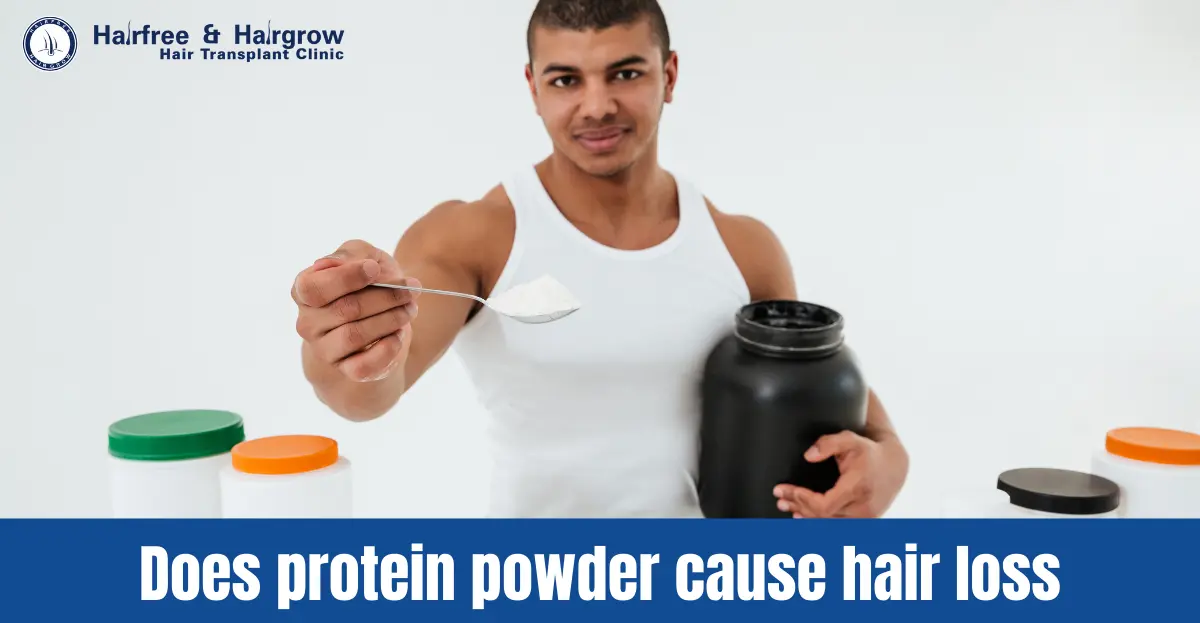
Protein powder is popular among fitness enthusiasts and those looking to build muscle, but a common concern often arises: does protein powder cause hair loss? This blog will explore the connection between protein powder and hair health, delving into scientific facts and the role of fitness nutrition in hair loss.
By understanding this, you can make informed decisions about your protein supplements and avoid misconceptions surrounding protein powder hair loss.
Table of Contents
Understanding Hair Loss
Hair loss is a complex issue that can have multiple causes, not all of which are related to diet or supplements. Here’s a breakdown of common types and factors that may contribute to hair loss.
Types of Hair Loss
- Androgenetic Alopecia: Also known as male or female pattern baldness, this genetic condition is one of the most common causes of hair thinning and baldness.
- Telogen Effluvium: This temporary hair loss occurs when a large number of hair follicles enter the resting phase. It can be triggered by stress, hormonal changes, or nutritional deficiencies.
Factors Contributing to Hair Loss
Aside from genetic factors, other aspects like hormonal changes, stress, poor diet, and extreme exercise regimens can contribute to hair loss. High-stress levels or inadequate nutrition, including a lack of certain nutrients, may also play a role.
The Role of Protein in Hair Health
Protein is essential for hair growth. Hair follicles are primarily made of a protein called keratin, and protein and hair health go hand-in-hand. A sufficient intake of protein supports hair strength and growth, while a deficiency can lead to hair thinning and weakening.
For an average adult, around 0.8 grams of protein per kilogram of body weight is recommended daily to maintain good health. This requirement may increase to 1.5–2.5 grams per kilogram for those engaging in intense physical activities, such as weightlifting or heavy exercise.
Meeting daily protein needs is crucial, but excessive protein can sometimes lead to other issues, as we’ll discuss below.
Protein Powder and Hair Loss: The Connection
There’s a lot of debate around the question, “Does protein powder cause hair loss?” While protein itself is not directly linked to hair loss, certain factors associated with protein powders and high-protein diets might impact hair health.
Whey Protein and DHT Levels
Whey protein, a common form of protein supplement, may indirectly impact hair due to its effects on testosterone levels. Intense weightlifting or heavy muscle-building exercises can increase testosterone, which, in turn, can be converted to dihydrotestosterone (DHT). DHT is associated with androgenetic alopecia, meaning that in those predisposed to hair loss, this hormone could worsen hair thinning or baldness.
Nutrient Imbalances from High Protein Intake
Relying heavily on protein supplements and reducing other food groups like carbohydrates, as seen in ketogenic or very low-carb diets, can lead to nutrient imbalances. Carbohydrates, vitamins, and minerals are also essential for hair health. When individuals follow a protein-heavy diet without balancing other nutrients, they may experience nutritional deficiency issues, which can lead to hair shedding.
Allergies and Sensitivities to Protein Powders
Some individuals may have allergic reactions or sensitivities to specific types of protein powders, like whey or soy. These reactions may trigger inflammation or stress in the body, potentially contributing to hair loss. Choosing a protein powder that aligns with your body’s needs and consulting a nutritionist can help avoid these reactions.
Must Read –
| Daily Hair Loss: Why Am I Losing More Hair Than Usual? |
| Is Daily Hair Wash Good or Bad? |
Can Too Much Protein Cause Hair Loss?
There is no simple rule that eating more protein automatically causes hair loss.
The concern is more likely to arise when a very high-protein diet replaces a balanced diet and results in inadequate intake of other nutrients or calories.
For example, someone following a highly restrictive diet while performing intense exercise may consume large amounts of protein but still fail to meet their overall nutritional requirements.
The goal should therefore be adequate and balanced nutrition, rather than simply maximizing protein intake.
Choosing the Right Protein Powder
Selecting the right type of protein powder is essential for minimizing any potential impact on your health, including hair health. Look for protein powders with minimal additives and fillers, and choose sources that suit your body’s needs, whether whey, plant-based, or a blend. Consulting a dietitian can also be helpful in determining the best choice for your unique needs.
Why Am I Losing Hair After Starting Protein Powder?
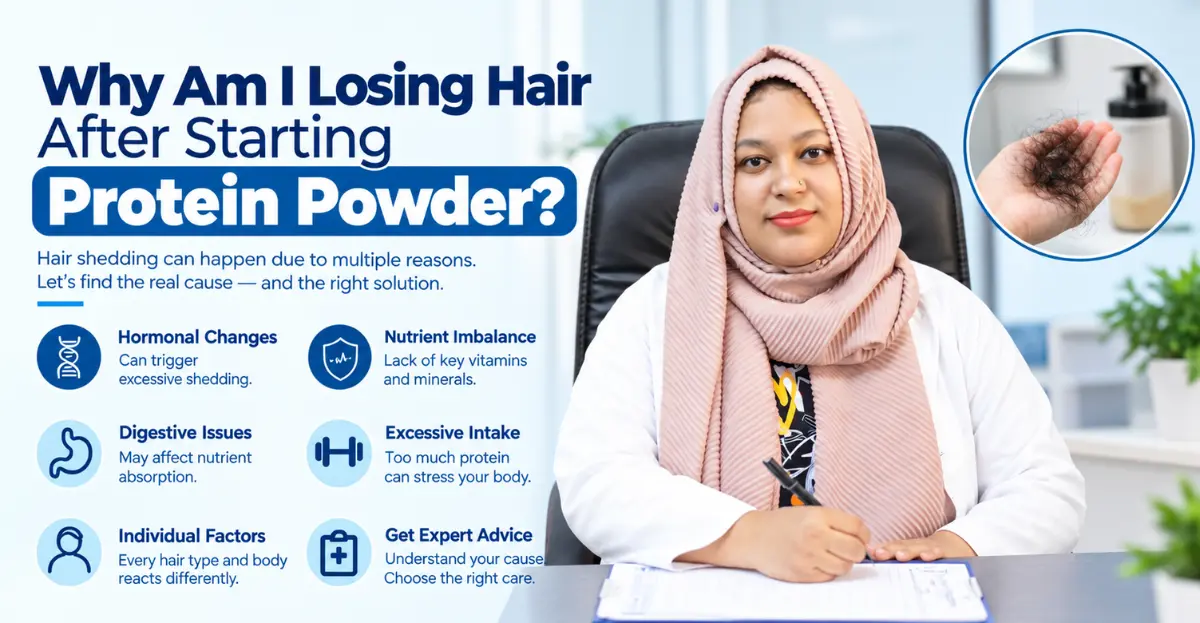
If hair shedding starts after you begin using protein powder, several explanations are possible.
Genetic Hair Loss
Androgenetic alopecia can gradually develop independently of protein supplementation. You may notice a receding hairline, thinning at the crown, widening of the part, or progressive reduction in hair density.
Rapid Weight Loss
A major reduction in calorie intake or rapid weight loss can trigger increased shedding known as telogen effluvium.
Restrictive Dieting
Some fitness diets severely restrict calories or entire food groups. Such diets can result in inadequate intake of nutrients important for hair growth.
Intense Training and Stress
Changes in exercise intensity, recovery, sleep, and psychological stress may coincide with increased hair shedding.
Nutritional Deficiencies
Low levels of certain nutrients may contribute to hair problems in some individuals. Testing should be based on medical evaluation rather than automatically taking multiple supplements.
An Existing Hair-Loss Condition
The protein powder may simply have been introduced around the same time that an underlying hair-loss condition became noticeable.
Should You Stop Protein Powder If Your Hair Is Falling?
Not necessarily.
If you are meeting your protein requirements safely and using a standard protein supplement, stopping it solely because you noticed hair shedding may not address the actual cause.
Instead, consider:
- Reviewing your overall diet.
- Checking whether you recently lost weight rapidly.
- Considering changes in exercise intensity or stress.
- Reviewing your family history of hair loss.
- Looking for signs of pattern hair loss or diffuse shedding.
- Discussing persistent hair loss with a qualified dermatologist or hair specialist.
Do not make major dietary or supplement changes based solely on the timing of hair shedding.
Expert Opinions and Research Findings
Several studies have examined the potential connection between protein powders and hair loss. While there is no direct evidence that protein powder causes hair loss, experts emphasize that hair loss is often a result of multiple factors, including diet, stress, genetics, and lifestyle. Maintaining a balanced diet is critical for overall health and ensuring that your body receives all necessary nutrients.
Gender Differences in Protein Metabolism
Protein metabolism can vary between men and women, with men typically requiring more protein, especially if they are engaged in intense exercise. Women may also need to be cautious with high-protein diets, as hormonal imbalances and dietary restrictions can lead to hair health issues.
How Men and Women Process Protein Differently
Men and women process protein differently due to hormonal differences. This can impact hair health since testosterone and DHT levels play a significant role in hair loss. Women may experience different effects due to estrogen’s protective qualities on hair.
How to Choose a Protein Powder
If you decide to use a protein supplement, consider:
- Your total daily protein requirement
- The protein source
- Your dietary preferences
- Known food allergies or intolerances
- Added ingredients and sweeteners
- Your overall diet
- Guidance from a qualified healthcare or nutrition professional when necessary
The purpose of protein supplementation should be to complement a balanced diet, not replace a varied diet.
Tips for Maintaining Hair Health While Using Protein Powder
- Balance Your Diet: Include a variety of nutrients, not just protein. Vitamins, minerals, and carbohydrates are essential for maintaining hair health.
- Stay Hydrated: Water is crucial for overall health, including hair health.
- Limit Stress: Stress management can prevent stress-related hair loss.
- Monitor Protein Intake: Avoid excessive protein; stick to the recommended amounts and consult a professional if unsure.
- Choose Quality Protein Supplements: Opt for high-quality, low-additive powders that don’t contain excessive fillers or allergens.
What Nutrients Are Important for Healthy Hair?
Healthy hair growth depends on adequate overall nutrition.
Important nutrients can include:
- Protein: Required for the production of keratin and normal tissue maintenance.
- Iron: Iron deficiency can be associated with hair shedding in some people.
- Zinc: Important for normal cellular processes.
- Vitamin D: Has been studied in relation to several hair-loss conditions.
- Vitamin B12: Deficiency can affect overall health and may be relevant when evaluating nutritional status.
- Essential fatty acids: Support overall nutritional health.
Not everyone with hair loss has a nutritional deficiency. Testing and treatment should be based on individual circumstances.
When Should You See a Hair Specialist for Hair Loss?
Consider professional evaluation if you experience:
- Persistent or increasing hair shedding
- Noticeable thinning
- A receding hairline
- Crown thinning
- Bald patches
- Sudden diffuse hair loss
- Scalp redness, scaling, or inflammation
- Hair loss that continues despite improving your diet
A hair specialist or dermatologist can assess the pattern of hair loss and determine whether further examination or testing is appropriate.
Conclusion
In summary, protein powder hair loss is generally a myth; there is no direct link between protein powder and hair loss. However, high-stress workouts, improper diet, or excessive protein intake without balancing other nutrients may indirectly affect hair health. For those using protein powders, focus on a balanced diet, regular hydration, and stress management to maintain healthy hair.
FAQ
Whey protein itself doesn’t directly cause hair thinning. However, it may increase testosterone levels, which, in people predisposed to hair loss, can convert to DHT and worsen hair thinning.
If you notice hair loss, review your diet for balance, consider speaking with a nutritionist, and ensure you’re meeting your body’s needs with sufficient vitamins and minerals.
Stick to around 0.8 grams per kilogram of body weight for average adults, and adjust based on physical activity levels. Avoid extreme high-protein diets without professional guidance.
Yes, a deficiency in protein can lead to hair loss, as protein is essential for hair structure and growth.
For professional advice on hair health and hair restoration options, consult experts at Hairfree & Hairgrow Clinic Bangladesh, where specialists are dedicated to helping you understand the best solutions for maintaining your hair health.
The commonly discussed relationship between whey protein and DHT does not establish that ordinary whey supplementation causes clinically significant DHT-related hair loss. DHT is involved in androgenetic alopecia, particularly in genetically susceptible individuals.
Not necessarily. If protein powder is helping you meet your nutritional needs, stopping it may not resolve the underlying problem. Persistent shedding should be evaluated to identify the actual cause.
There is no established evidence that plant protein is universally better for hair than whey. Both can contribute to adequate protein intake when appropriately incorporated into a balanced diet.
Protein, iron, zinc, vitamin D, vitamin B12, and other nutrients can be important for overall hair and body health. However, supplementation should be guided by individual nutritional needs and, where appropriate, medical testing.
Protein, iron, zinc, vitamin D, vitamin B12, and other nutrients can be important for overall hair and body health. However, supplementation should be guided by individual nutritional needs and, where appropriate, medical testing.