
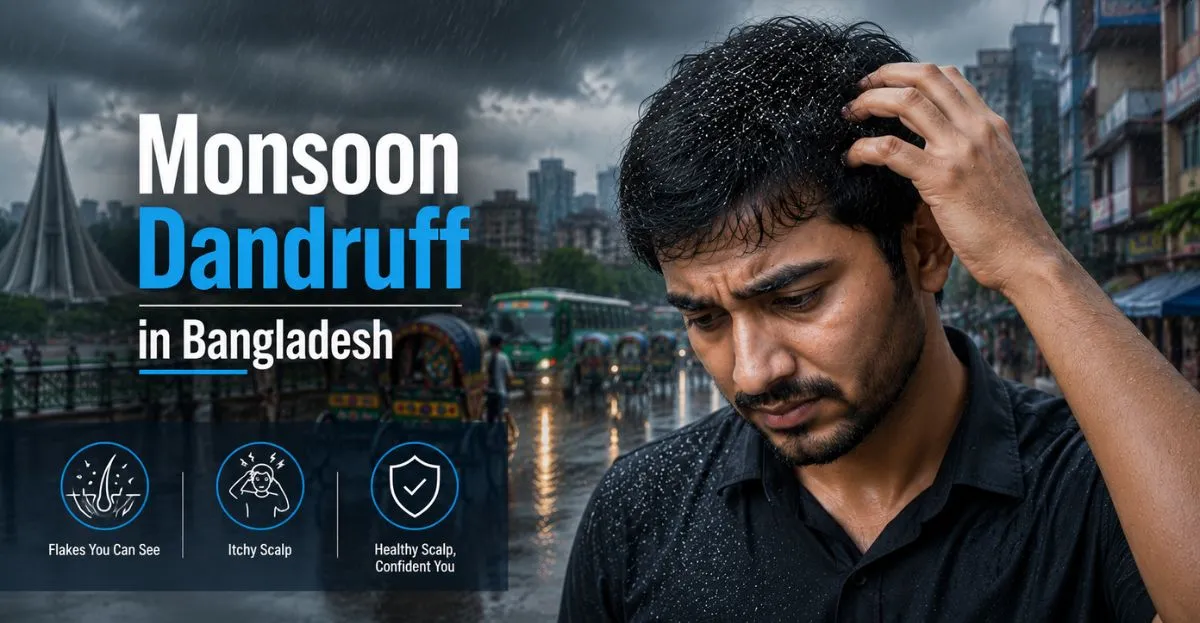
The monsoon in Bangladesh, roughly June through October, brings welcome relief from the pre-monsoon heat, but for your scalp, it’s often the toughest stretch of the year. Humidity in Dhaka, Chattogram, and Sylhet regularly climbs above 80–90% during these months, and that combination of moisture, heat, and sweat creates the perfect breeding ground for dandruff.
If you’ve noticed more flaking, itching, or an oddly oily-yet-irritated scalp the moment the rains start, you’re not imagining it. The good news: monsoon dandruff is very manageable once you understand why it happens and treat it correctly.
Check Your Hair Transplant Cost Instantly
Table of Contents
Why Does Dandruff Get Worse During Bangladesh's Monsoon?
- White or yellowish flakes on the scalp, shoulders, or dark-colored clothing (kurta collars are a common giveaway)
- Persistent itching, especially after sweating
- An oily scalp combined with flaky patches
- Redness or mild scalp irritation
- Increased hair fall from repeated scratching
- A scalp that feels dry or tight right after washing, despite being oily otherwise
If these symptoms don’t improve with basic care, it’s worth booking a consultation with a dermatologist or trichologist rather than cycling through shampoos on guesswork.
Can Monsoon Dandruff Cause Hair Fall?
Indirectly, yes. Dandruff itself doesn’t cause permanent baldness, but constant scratching irritates the scalp barrier and weakens hair at the root, leading to noticeably more shedding during monsoon months. Treating dandruff early is one of the simplest ways to protect hair density going into winter.
Best Treatments for Monsoon Dandruff in Bangladesh
1. Choose a Medicated Anti-Dandruff Shampoo
Look for these active ingredients; all are available in Bangladesh through pharmacies and online platforms like Arogga, Shajgoj, and Daraz.
- Ketoconazole 2%: found in locally manufactured shampoos such as Dancel, Ketocon, and KetoDruff
- Ciclopirox Olamine 1%: found in brands like Candela and Clopirox.
- Selenium Sulfide: The active ingredient in Selsun-type shampoos
- Zinc Pyrithione
- Salicylic Acid
Prices for medicated anti-dandruff shampoos in Bangladesh typically range from around ৳150 for entry-level options to ৳800+ for premium imported formulas, with the most effective ketoconazole-based local brands sitting in the ৳250–৳500 range. Always check the concentration and follow the usage directions on the pack, or better, a dermatologist’s advice.
2. Wash Your Hair More Often During Monsoon
Aim for 2–3 washes a week at a minimum, or more if your scalp gets oily quickly or you get caught in the rain. Don’t let sweat, road dust, or rainwater sit on your scalp for hours; this is one of the biggest triggers people in humid cities underestimate.
3. Keep the Scalp Genuinely Dry
- Never tie wet hair; it traps moisture against the scalp for hours.
- Dry your scalp fully before putting on a helmet, cap, or hijab.
- If you get soaked in the rain, rinse and dry your hair as soon as you get home rather than letting it air-dry slowly indoors in humid air.
4. Go Easy on Hair Oil
Traditional oils like coconut oil (narikel tel) or mustard oil (sorisha tel) are deeply rooted in Bangladeshi hair care, and they’re not the enemy, but during monsoon, heavy or overnight oiling on an already humid, oily scalp can worsen flaking. Use a light amount and wash it out within a few hours rather than leaving it in overnight.
5. Support Your Scalp Through Diet
A scalp-friendly diet is easy to build around every day. Bangladeshi staples:
- Omega-3s: hilsa (ilish), other oily fish
- Protein: lentils (dal), eggs, fish
- Iron & zinc: leafy greens (shak), pulses
- Vitamin B complex: whole grains, eggs
And drink enough water. Humidity makes you sweat more, but people often drink less water in the rainy season simply because they feel less thirsty than in summer heat.
Read Also – Hair Fall in Monsoon: Causes, Prevention Tips & Treatments That Actually Work
Do Home Remedies Actually Work?
Some remedies offer mild, temporary relief:
- Aloe vera gel, applied directly to the scalp
- Diluted tea tree oil, mixed into a carrier oil, not applied neat
- Apple cider vinegar rinses, used sparingly
These can support a treatment routine, but they aren’t a substitute for a medicated shampoo if your dandruff is moderate to severe. Think of them as maintenance, not treatment.
When Should You See a Hair Specialist in Bangladesh?
Book a dermatologist or trichologist consultation if:
- Dandruff persists beyond 4–6 weeks despite consistent shampoo use.
- Itching is severe enough to disrupt sleep or daily life.
- You notice redness, swelling, or pus-like discharge.
- Hair fall is increasing rapidly alongside the flaking.
- Over-the-counter shampoos aren’t making a difference.
A specialist can also tell the difference between dandruff, seborrheic dermatitis, and fungal scalp infections, conditions that look similar but need different treatment approaches.
If you are looking for a reliable place for science-based treatment, the ‘Hair Free and Hair Grow Bangladesh Clinic‘ is one of the best options in the country for hair and scalp treatment. Our specialists diagnose the root cause of your dandruff or hair fall rather than just recommending another shampoo, and build a treatment plan suited to Bangladesh’s climate and your specific scalp condition.
Monsoon Dandruff Prevention Checklist
- Wash hair 2–3 times a week, more if needed
- Dry your scalp fully before wearing a helmet, cap, or hijab.
- Avoid sharing combs, towels, and pillowcases.
- Clean helmets and pillowcases regularly during the rainy season.
- Eat a balanced, zinc- and omega-3-rich diet.
- Manage stress; it’s a known dandruff trigger.
- Choose a dermatologist-recommended medicated shampoo over a random trial-and-error
Frequently Asked Questions
Is dandruff more common during the monsoon in Bangladesh?
Yes. The combination of high humidity, heat, and sweat during Bangladesh’s June–October monsoon creates ideal conditions for the yeast that triggers dandruff to overgrow.
Can dandruff cause permanent hair loss?
No, dandruff itself doesn’t cause permanent hair loss. But ongoing scalp inflammation and scratching can lead to noticeably more temporary hair shedding.
How often should I wash my hair during the monsoon in Bangladesh?
Two to three times a week works for most people, but if you’re commuting in humidity or getting caught in rain often, washing slightly more frequently helps prevent buildup.
Which anti-dandruff shampoo is best for the monsoon, and is it available in Bangladesh?
Shampoos with ketoconazole (like Dancel or Ketocon), ciclopirox olamine (like Candela), zinc pyrithione, or selenium sulfide are effective and widely available at Bangladeshi pharmacies and online platforms like Arogga and Shajgoj. The right one depends on your dandruff severity; a dermatologist can advise on concentration and frequency.
Is coconut or mustard oil bad for dandruff during the monsoon?
Not inherently, but heavy or overnight application on an already humid, oily scalp can worsen flaking in monsoon months. Use lightly and wash out within a few hours.
Conclusion
Monsoon dandruff is one of the most common seasonal scalp complaints in Bangladesh, but it’s very treatable with consistent scalp hygiene, the right medicated shampoo, and a few adjustments to your monsoon routine: drying your scalp properly, washing more often, and going lighter on oils.
If your dandruff is persistent, severe, or paired with rapid hair fall, don’t wait out the season; book a consultation with a qualified dermatologist or hair specialist for a treatment plan suited to your scalp.