
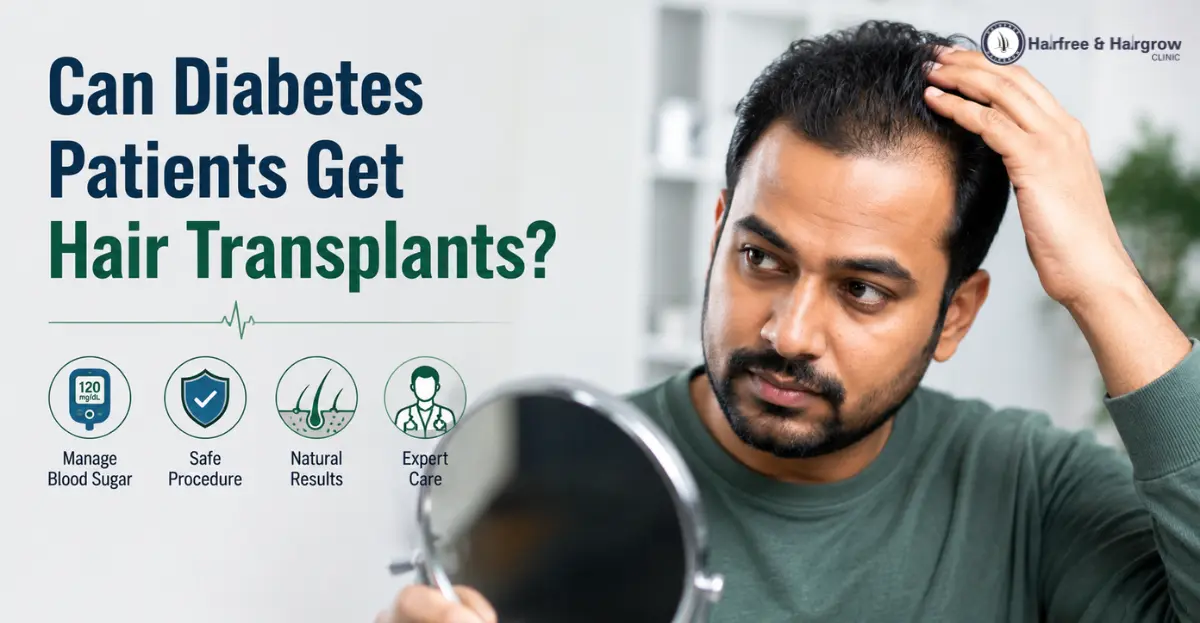
Yes, most diabetes patients can safely undergo a hair transplant if their blood sugar is well controlled before surgery. The most important factor is maintaining stable blood glucose and an acceptable HbA1c level before the procedure. Patients with well-managed Type 1 or Type 2 diabetes are often good candidates after a thorough medical evaluation.
Hair loss can affect confidence and quality of life, leading many people to consider hair transplant surgery. If you have diabetes, you may wonder whether the procedure is safe or whether the condition will affect your results.
The good news is that diabetes alone does not prevent you from getting a hair transplant. Thousands of diabetic patients undergo successful procedures every year. However, proper blood sugar control is essential because diabetes can influence wound healing, increase the risk of infection, and affect graft survival.
Check Your Hair Transplant Cost Instantly
Table of Contents
Can Type 1 Diabetics Get a Hair Transplant? What About Type 2?
Yes. Patients with both Type 1 and Type 2 diabetes can undergo hair transplant surgery if their diabetes is well managed. The decision depends on blood sugar control and overall health rather than the type of diabetes.
Type 1 diabetes occurs when the body produces little or no insulin. Patients usually require lifelong insulin therapy. Type 2 diabetes develops when the body becomes resistant to insulin or does not produce enough of it. Many patients manage Type 2 diabetes with lifestyle changes, oral medications, insulin, or a combination of treatments.
Before approving surgery, your hair transplant surgeon will review several factors, including:
- Recent HbA1c results
- Fasting and random blood glucose levels
- Current medications
- Existing diabetic complications
- Previous wound healing history
- Overall physical health
Patients with controlled diabetes often heal normally after surgery and achieve excellent results. Those with poorly controlled diabetes may need to improve their glucose levels before the procedure.
Type 1 patients should also discuss insulin timing on the day of surgery. Patients with Type 2 diabetes taking glucose-lowering medications may require temporary adjustments under their physician’s guidance.
Key Takeaway: Well-controlled Type 1 and Type 2 diabetes usually do not prevent a successful hair transplant.
What HbA1c or Blood Sugar Level Is Required Before Hair Transplant Surgery?
| Measurement | General Clinical Guidance |
| HbA1c below approximately 7% | Indicates good diabetes control |
| HbA1c between 7% and 8% | May be acceptable depending on overall health |
| HbA1c above 8% to 9% | Surgery may be postponed until better control is achieved |
| Stable fasting blood glucose | Preferred before surgery |
| No recent diabetic emergencies | Important for patient safety |
- HbA1c test
- Fasting blood sugar
- Random blood glucose
- Complete blood count
- Kidney function tests if necessary
- Medical clearance from your diabetes specialist
Why Does Diabetes Affect Healing and Hair Graft Survival?
Poorly controlled diabetes can slow the body’s natural healing process. High blood sugar affects circulation, immune function, and tissue repair, which may influence recovery after hair transplant surgery.
Hair transplantation involves creating thousands of tiny recipient sites and donor extractions. Successful healing depends on:
- Healthy blood circulation
- Good oxygen delivery
- Effective immune response
- Normal collagen production
- Healthy tissue regeneration
When blood sugar remains elevated for long periods, these healing mechanisms may become less efficient.
Possible effects include:
- Slower wound healing
- Increased risk of infection
- Longer-lasting redness
- Delayed shedding of crusts
- Reduced graft survival in severe cases
Fortunately, patients with well-controlled diabetes often recover similarly to individuals without diabetes.
Following your surgeon’s instructions before and after surgery plays a major role in achieving the best possible outcome.
Key Takeaway: Good blood sugar control supports faster healing and healthier graft survival after a hair transplant.
FUE vs. FUT: Which Hair Transplant Method Is Better for Diabetic Patients?
For most diabetic patients, FUE is generally the preferred option because it creates smaller wounds and usually allows quicker healing. However, FUT may still be appropriate in selected cases.
FUE (Follicular Unit Extraction)
Advantages include:
- Tiny extraction sites
- Faster healing
- No long linear scar
- Less post-operative discomfort
- Easier wound care
FUT (Follicular Unit Transplantation)
Advantages include:
- May provide a higher number of grafts in one session
- Suitable for selected advanced hair loss cases
Potential disadvantages include the following:
- Larger surgical incision
- Longer healing period
- Greater dependence on proper wound healing
FUE vs. FUT for Diabetic Patients
Factor | FUE | FUT |
Wound size | Small | Larger incision |
Healing time | Usually faster | Usually longer |
Scarring | Tiny dot scars | Linear scar |
Recovery | Easier | More intensive |
Suitable for controlled diabetes | Often preferred | May be suitable in selected patients |
The final decision depends on your hair loss pattern, donor hair quality, medical history, and your surgeon’s recommendation.
Key Takeaway: FUE is often the preferred technique for diabetic patients because it generally involves smaller wounds and faster recovery.
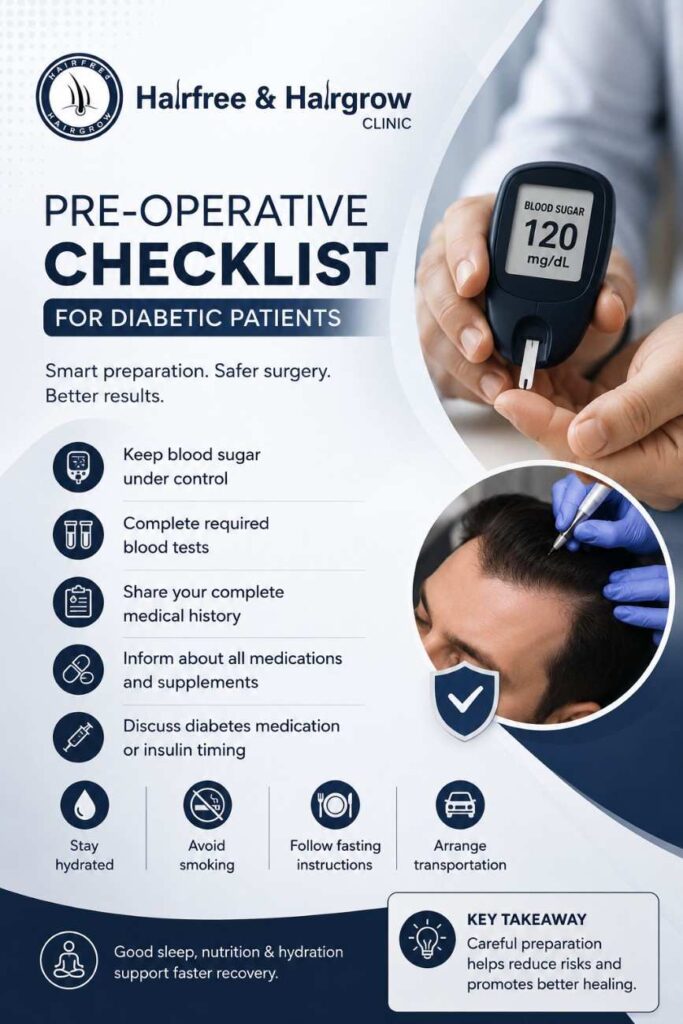
Pre-operative Checklist for Diabetic Patients
Proper preparation significantly improves surgical safety and healing outcomes. Most complications can be reduced through careful planning before surgery.
Before your hair transplant, you should:
- Keep blood sugar within your physician’s recommended range.
- Complete all requested blood tests.
- Share your complete medical history.
- Inform your surgeon about all medications and supplements.
- Discuss insulin or diabetes medication timing.
- Stay hydrated before surgery.
- Avoid smoking if applicable.
- Follow all fasting instructions if provided.
- Arrange transportation after the procedure if necessary.
Maintaining healthy sleep, proper nutrition, and good hydration also supports recovery.
Key Takeaway: Careful preparation before surgery helps reduce complications and improves healing.
Post-operative Care and Recovery Timeline for Diabetic Patients
Recovery is usually similar to that of non-diabetic patients when blood sugar remains well controlled. Some patients with diabetes may experience slightly slower healing, making follow-up care especially important.
Recovery Timeline Comparison
Recovery Stage | Non-Diabetic Patient | Well-Controlled Diabetic Patient |
Mild swelling | 2 to 4 days | 2 to 5 days |
Scab formation | 2 to 3 days | 2 to 4 days |
Scabs fall off | 7 to 10 days | 8 to 12 days |
Donor healing | About 10 to 14 days | About 10 to 16 days |
Hair shedding | 2 to 6 weeks | Similar |
New hair growth | Around 3 to 4 months | Similar if healing is normal |
Final results | 12 to 18 months | 12 to 18 months |
During recovery:
- Take prescribed medications as directed.
- Keep the scalp clean.
- Avoid scratching the grafts.
- Attend follow-up appointments.
- Monitor blood sugar regularly.
- Eat a balanced diet rich in protein.
Key Takeaway: Stable blood sugar throughout recovery helps promote healthy healing and long-term transplant success.
What Are the Risks of Hair Transplant Surgery for Diabetic Patients?
Most diabetic patients experience no serious complications when their diabetes is well managed. However, uncontrolled diabetes increases the likelihood of surgical risks.
Possible risks include the following:
- Delayed wound healing
- Infection
- Increased inflammation
- Poor scar healing
- Reduced graft survival
- Longer recovery time
Fortunately, these risks can often be minimized through proper patient selection, good glucose control, experienced surgical care, and careful post-operative follow-up.
Patients should contact their surgeon immediately if they notice:
- Fever
- Increasing redness
- Severe swelling
- Persistent bleeding
- Pus or unusual discharge
- Severe pain
Early treatment can prevent more serious complications.
Key Takeaway: Well-managed diabetes greatly reduces the risk of complications after a hair transplant.
When Would a Hair Transplant Surgeon Decline Surgery?
A responsible surgeon may postpone or decline surgery if the procedure would place the patient at unnecessary risk. In many cases, surgery can be reconsidered once diabetes is better controlled.
Common reasons include:
- Very high HbA1c levels
- Poorly controlled blood sugar
- Active infections
- Serious cardiovascular disease
- Poor wound healing history
- Uncontrolled hypertension
- Severe diabetic complications
- Lack of medical clearance
Delaying surgery is often a safety measure rather than a permanent decision.
Many patients become eligible after improving their overall health and diabetes management.
Key Takeaway: Hair transplant surgery should only proceed when the benefits clearly outweigh the risks.
Hair Transplant Cost and Consultation Process for Diabetic Patients in Bangladesh
Diabetic patients generally pay the same hair transplant cost as non-diabetic patients. However, additional medical tests or physician clearance may increase the overall consultation cost.
During your consultation in Dhaka, the clinic may:
- Review your medical history.
- Assess your hair loss pattern.
- Examine donor hair quality.
- Review your HbA1c and blood sugar reports.
- Recommend additional laboratory tests if needed.
- Determine whether FUE or FUT is more suitable.
- Create a personalized treatment plan.
The final cost depends on factors such as the following:
- Number of grafts required
- Hair transplant technique
- Surgeon experience
- Clinic facilities
- Additional medical evaluations
Choosing an experienced clinic with expertise in treating patients with medical conditions is often more important than selecting the lowest price.
Frequently Asked Questions
Can diabetic patients safely get a hair transplant?
Yes. Most diabetic patients can safely undergo hair transplant surgery when their blood sugar is well controlled, and they receive medical clearance if needed.
Is FUE better than FUT for people with diabetes?
In many cases, yes. FUE creates smaller wounds and usually allows faster healing, making it a common choice for diabetic patients.
What HbA1c level is considered acceptable?
Many surgeons prefer an HbA1c below approximately 7% to 8%, although the acceptable level varies depending on the patient’s overall health.
Final Thoughts
A diabetes diagnosis does not automatically prevent you from restoring your hair through transplantation. The key to a successful outcome is careful planning, stable blood sugar control, and choosing an experienced hair transplant surgeon who understands the needs of diabetic patients.
Whether you have Type 1 or Type 2 diabetes, a comprehensive medical evaluation can determine whether you are a suitable candidate. With proper preparation and post-operative care, many diabetic patients achieve natural-looking, long-lasting hair transplant results.