
Hair transplant surgery is one of the most effective solutions for permanent hair restoration. Yet one of the most common questions I hear in my clinic is surprisingly simple:
“How long does a hair transplant take?”
Most people expect a straightforward answer. The reality is that a hair transplant is not a single event. It’s a process that starts before the procedure, continues throughout the surgery day, and extends for months afterward as new hair begins to grow.
Understanding the timeline helps reduce anxiety and prepares you for a smoother experience.
In this guide, I’ll walk you through exactly what happens before, during, and after a hair transplant, how many hours the procedure takes, and what you can realistically expect at every stage.
Table of Contents
How Long Does a Hair Transplant Take?
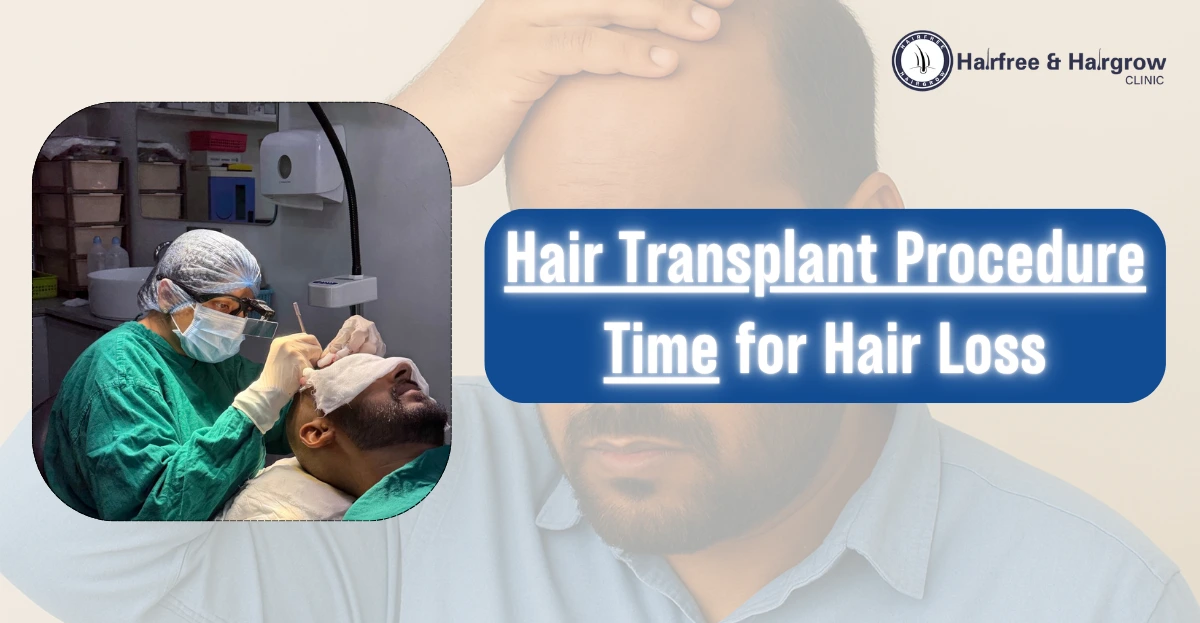
Most hair transplant procedures take between 6 and 10 hours on the day of surgery.
The exact duration depends on:
- Number of grafts required
- Size of the bald area
- FUE technique or FUT technique
- Hair characteristics
- Whether the procedure is completed in one or multiple sessions
For most patients:
Grafts | Approximate Procedure Time |
1,000–1,500 | 4–6 Hours |
2,000–3,000 | 6–8 Hours |
3,500–4,500 | 8–10 Hours |
5,000+ | Multiple Sessions |
While the surgery itself may last one day, the complete hair restoration journey typically spans 12–18 months.
Check Your Hair Transplant Cost Instantly
Before the Hair Transplant: Preparation Timeline
The procedure actually starts well before you enter the operating room.
1–2 Weeks Before Surgery
During this period, your surgeon evaluates:
- Donor area density
- Scalp condition
- Medical history
- Expected graft requirement
A detailed hair analysis helps determine whether you’re a suitable candidate and what results can realistically be achieved.
You may also receive instructions regarding:
- Blood-thinning medications
- Hair care routine
Following these instructions can significantly improve healing and graft survival.
The Night Before Surgery
Most patients don’t need any special preparation.
However, we usually recommend:
- Getting adequate sleep
- Washing your hair thoroughly
- Avoiding alcohol
- Eating a healthy dinner
- Staying hydrated
A well-rested patient generally has a more comfortable procedure experience.
On the Day of Surgery
Expect to spend the entire day at the clinic.
The first hour is usually dedicated to:
- Final consultation
- Hairline design
- Clinical photographs
- Consent process
- Procedure planning
The planning stage is often one of the most important stages because your hairline design directly affects the naturalness of the final result.
During the Hair Transplant Procedure
Many patients imagine a major operation.
In reality, modern FUE hair transplantation is a minimally invasive procedure performed under local anesthesia.
You remain awake throughout the surgery.
Most patients spend the day
- Watching movies
- Listening to music
- Browsing on their phone
- Talking with the medical team
Let’s break down the timeline.
Step 1: Local Anesthesia (15–30 Minutes)
The first step is numbing the donor and recipient areas.
This usually takes around 15 to 30 minutes.
Once the anesthesia starts working, the procedure becomes largely painless.
You may feel pressure or movement, but not significant pain.
Step 2: Graft Extraction (2–4 Hours)
In FUE hair transplantation, individual follicular units are carefully extracted from the donor area.
The duration depends on:
- Number of grafts
- Donor density
- Hair characteristics
For a 3,000-graft procedure, extraction often takes 2–4 hours.
This stage requires precision because every follicle must remain healthy and intact.
Step 3: Lunch Break (30–60 Minutes)
Most clinics provide a break during longer procedures.
Patients can:
- Eat
- Stretch
- Relax
- Use the restroom
This helps maintain comfort throughout the day.
Step 4: Recipient Site Creation (1–2 Hours)
Once grafts are prepared, tiny channels are created in the recipient area.
This stage is critical because it determines the following:
- Hair direction
- Hair angle
- Hair density
- Natural appearance
A well-designed implantation pattern often makes the difference between a natural-looking result and an obvious transplant.
Step 5: Graft Implantation (2–4 Hours)
The final stage involves placing each graft into the prepared recipient sites.
This is usually the longest part of the procedure.
Every graft is positioned carefully to mimic natural hair growth.
The more grafts required, the longer the implantation takes.
Does Hair Transplant Surgery Hurt?
This is probably the second most common question after procedure duration.
The honest answer is: Most patients find the procedure much easier than they expected. The local anesthesia injections can cause brief discomfort. After that, pain is generally minimal.
Many patients spend part of the procedure sleeping. Post-operative discomfort is usually mild and manageable with prescribed medications.
Immediately After the Procedure
Once the transplant is completed:
- The scalp is cleaned.
- Post-operative instructions are reviewed
- Medications are prescribed
- The first follow-up appointment is scheduled
Most patients return home the same day.
No hospital admission is required.
Hair Transplant Recovery Timeline
Understanding recovery is just as important as understanding surgery duration.
Day 1–3
You may notice:
- Mild swelling
- Redness
- Tiny scabs
- Tightness in the donor area
These are normal parts of healing.
Day 7–10
Most scabs begin to fall off naturally.
The transplanted area starts looking more normal.
Many patients feel comfortable returning to social activities at this stage.
Week 2–6: The Shedding Phase
This is where many patients become worried.
The transplanted hairs often fall out.
This is completely expected.
The follicles remain alive beneath the skin and enter a resting phase before producing new hair.
Month 3–4
Early growth begins.
New hairs start emerging from the transplanted follicles.
The changes are often subtle at first.
Month 6
Visible improvement becomes noticeable.
Hair density gradually increases.
Many patients begin receiving compliments around this stage.
Month 9–12
Most patients see significant growth.
Hair becomes thicker, longer, and more natural in appearance.
Month 12–18
Final results are usually achieved.
This is when the transplanted hair reaches maximum maturity and density.
Factors That Affect Hair Transplant Procedure Time
Not every surgery follows the exact same schedule.
Several factors influence procedure duration.
Number of Grafts
More grafts require more extraction and implantation time.
This is usually the biggest factor.
Hair Characteristics
Curly, wavy, and coarse hair may require additional precision during extraction and placement.
Donor Area Quality
Patients with strong donor density often allow for more efficient graft harvesting.
Technique Used
FUE procedures generally take longer than FUT because grafts are extracted individually.
Team Experience
An experienced surgical team can perform the procedure efficiently while maintaining graft quality.
Is a Longer Procedure Better?
Not necessarily.
The goal is not speed.
The goal is precision.
A successful hair transplant depends on:
- Proper graft handling
- Natural hairline design
- Correct angulation
- High graft survival
A well-executed procedure is always more important than a fast one.
Why Choosing the Right Clinic Matters
Hair transplantation is both a medical procedure and an artistic process.
The outcome depends on much more than the number of grafts transplanted.
The surgeon’s experience, planning, and technique directly influence:
- Hairline naturalness
- Density
- Donor preservation
- Long-term results
This is why choosing the best clinic for hair transplant is often far more important than simply focusing on the price or the duration of the procedure.
Final Thoughts
A hair transplant procedure typically takes 6 to 10 hours, but the complete journey lasts much longer.
The surgery itself is only the beginning.
Real results develop gradually over the following months as transplanted follicles enter new growth cycles.
The good news is that modern hair transplantation is safe, minimally invasive, and capable of producing natural-looking, permanent results when performed by an experienced team.
If you’re considering a hair transplant, focus less on how many hours you’ll spend in the clinic and more on choosing the right surgeon, realistic expectations, and a long-term treatment plan.
The time invested today can deliver results that last for years.
FAQs
1. How many hours does a hair transplant procedure take?
Most hair transplant procedures take between 6 and 10 hours, depending on the number of grafts being transplanted and the technique used.
2. Can a hair transplant be completed in one day?
Yes. Most FUE hair transplants are completed in a single day. Larger sessions involving more than 5,000 grafts may require multiple days.
3. Is hair transplant surgery painful?
The procedure is performed under local anesthesia, so pain is minimal. Most patients experience only mild discomfort during anesthesia administration.
4. How long does it take to recover after a hair transplant?
Initial healing usually occurs within 7–14 days. However, final hair growth results typically take 12–18 months.
5. When will I start seeing new hair growth?
Most patients begin noticing new growth around 3–4 months after the procedure, with significant improvements appearing between 6 and 12 months.