If you are facing advanced hair loss and considering a 5,000-graft hair transplant in Bangladesh, the first question on your mind is likely the cost. But price alone should not guide your decision. What really matters is how many grafts you actually need, what results you can expect, and whether the clinic you choose can deliver natural, long-lasting outcomes.
If you are serious about restoring your hair and confidence, this guide will help you make an informed decision.
You can also book a consultation with Hair Free and Hair Grow Clinic Bangladesh to get a personalized graft assessment and cost estimate based on your hair loss stage.
Table of Contents
What Is a 5000-Graft Hair Transplant?
A graft is a small unit of tissue that contains one to four hair follicles. In a 5000-graft hair transplant, approximately 5000 of these follicular units are extracted from the donor area, usually the back and sides of the scalp, and implanted into bald or thinning areas.
This level of transplantation is considered a large session and is typically recommended for patients with advanced hair loss, especially those in Norwood Scale grades 5 to 7. It allows coverage of a significant portion of the scalp, including the hairline, mid-scalp, and crown.
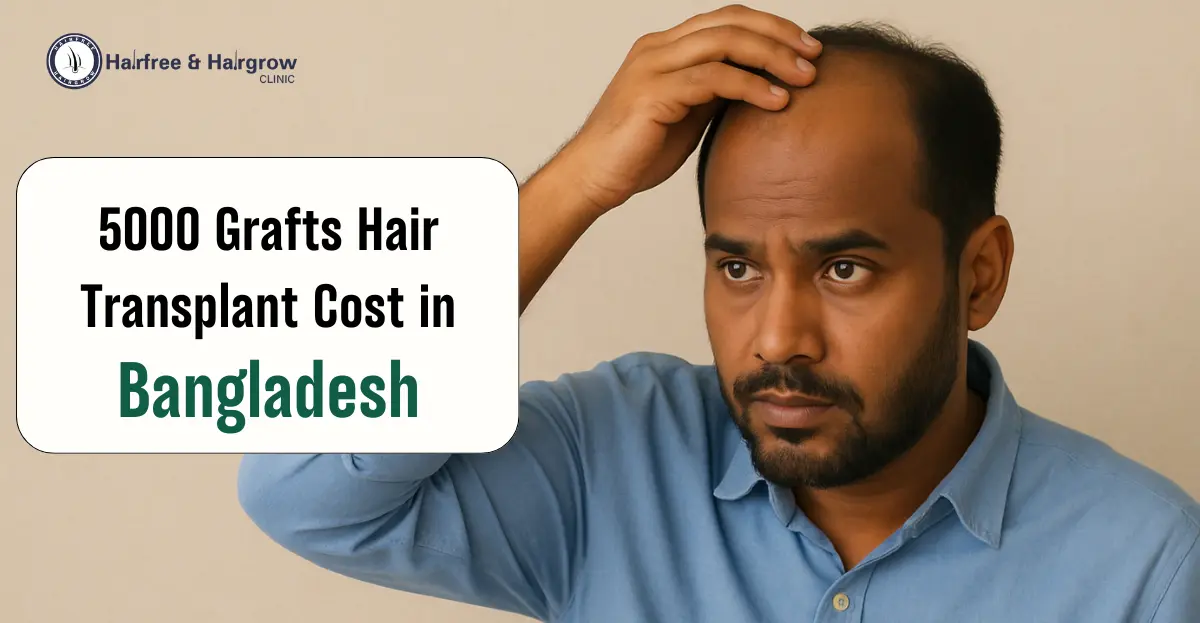
5000 Grafts Hair Transplant Cost in Bangladesh
The cost of a 5000-graft hair transplant in Bangladesh varies depending on the clinic, the surgeon’s expertise, and the technique used. On average, you can expect:
BDT 150000 to BDT 350000
- Advanced techniques such as Sapphire FUE or DHI
BDT 250000 to BDT 500000
- FUT Hair Transplant Cost
BDT 120000 to BDT 250000
Compared to countries like the USA, the UK, or even Turkey, Bangladesh offers highly affordable pricing while maintaining excellent clinical standards in reputed clinics.
Cost Per Graft in Bangladesh
Understanding per-graft pricing helps you estimate overall expenses more accurately:
- FUT Method
BDT 25 to BDT 50 per graft
FUE Method
- BDT 35 to BDT 70 per graft
Advanced FUE or DHI
- BDT 50 to BDT 100 per graft
The total cost depends not only on graft count but also on factors such as surgeon experience, clinic infrastructure, and the technology used.
What Areas Can 5000 Grafts Cover
A 5000-graft session is designed for extensive coverage. It can typically restore the following:
- Hairline reconstruction
- Full frontal scalp
- Mid-scalp density
- Partial or full crown coverage
In terms of surface area, 5000 grafts can cover approximately 200 to 250 square centimeters, depending on the density planned.
However, achieving a natural look depends on strategic placement rather than simply filling the scalp. A skilled surgeon focuses on hairline design and density distribution to ensure realistic results.
Results Timeline for a 5000-Graft Hair Transplant
Hair transplant results take time and follow a predictable pattern:
- Months 1 to 3
Shedding phase, where transplanted hair falls out. This is normal and temporary.
- Months 4 to 6
New hair begins to grow slowly. Growth may appear uneven at this stage.
- Months 9 to 12
Visible improvement in density and coverage.
- Months 12 to 18
Final results with thicker, mature hair growth and natural appearance.
Patients who undergo 5000 graft procedures often see a dramatic transformation, especially when hair loss is extensive.
Success Rate of Hair Transplant in Bangladesh
Experienced surgeons generally achieve a high success rate with modern hair transplants. Most reputable clinics report a graft survival rate of 90 to 95 percent.
Factors that influence success include:
- Surgeon’s skill and experience
- Quality and density of donor hair
- Proper handling and implantation of grafts
- Post-operative care and patient compliance
Choosing a trusted clinic significantly increases your chances of achieving long-lasting results.
Who Is the Right Candidate for 5000 Grafts
You may be a suitable candidate if:
- You have advanced hair loss in Norwood grades 5 to 7.
- You need full scalp coverage from hairline to crown.
- You have a strong donor hair density.
- Your hair loss has stabilized.
- You are in good general health.
Patients with mild to moderate hair loss may not require such a high graft count and should consider smaller sessions.
Use this calculator for a detailed cost calculation:
Why Bangladesh Is Becoming a Preferred Destination
Bangladesh is emerging as a reliable option for hair transplants due to the following:
- Affordable pricing compared to global standards
- An increasing number of skilled surgeons
- Availability of modern techniques like FUE and DHI
- Personalized care and consultation
However, results depend heavily on clinic quality, so careful selection is essential.
About HairFree and Hair Grow Clinic, Bangladesh
Hair Free and Hair Grow Clinic Bangladesh has established itself as one of the trusted names in hair restoration. With a focus on advanced techniques and patient-centric care, the clinic offers comprehensive solutions for individuals dealing with hair loss.
Key highlights include:
- Experienced team of hair transplant surgeons and trichologists
- Use of modern technology, such as Sapphire FUE and advanced implantation tools
- Detailed scalp analysis before every procedure
- Transparent pricing with no hidden charges
- Strong focus on natural hairline design and density planning
- Dedicated post-operative care and follow-up support
The clinic has successfully treated a large number of patients with varying degrees of hair loss, making it a preferred choice for those seeking reliable results in Bangladesh.
How to Choose the Best Hair Transplant Clinic in Bangladesh
Selecting the right clinic is critical for achieving natural and permanent results. Here are key factors to consider:
- Check the surgeon’s qualifications and experience.
- Review before- and after-patient results.
- Ensure proper consultation and scalp evaluation.
- Confirm the availability of advanced techniques.
- Look for transparent pricing and clear communication.
- Verify patient reviews and testimonials.
Avoid choosing a clinic based on cost alone, as poor quality procedures can lead to unnatural results and the need for corrective surgeries.
Is a 5000-Graft Hair Transplant Worth It?
For patients with extensive hair loss, a 5000-graft procedure can provide one of the most significant transformations possible. It offers wide coverage, improved density, and long-term results when done correctly.
However, the outcome depends on realistic expectations, proper planning, and choosing an experienced clinic.
Frequently Asked Questions
- How many hairs are in 5000 grafts?
On average, one graft contains around 2 hairs, so 5000 grafts can produce approximately 9000 to 11000 hairs.
- Is 5000 grafts safe in one session?
Yes, in experienced hands, 5000 grafts can be safely performed in one or two sessions, depending on scalp condition and donor capacity.
- Will the transplanted hair last forever?
Yes, transplanted hair is usually permanent because it is taken from DHT-resistant areas.
- How long does the procedure take?
A 5000-graft transplant typically takes 6 to 10 hours, depending on technique and team efficiency.
- When can I return to work?
Most patients resume normal activities within 5 to 7 days.
Final Thoughts
A 5000-graft hair transplant is a major step toward restoring both your hair and confidence. Bangladesh offers cost-effective options, but success depends on choosing the right clinic and clearly understanding the procedure.
If you are considering this treatment, consult HairFree and HairGrow Clinic Bangladesh for a detailed evaluation and a personalized treatment plan tailored to your hair loss condition.