
Noticing more hair fall after Ramadan? Before you blame fasting, it’s important to understand what may really be causing your hair loss.
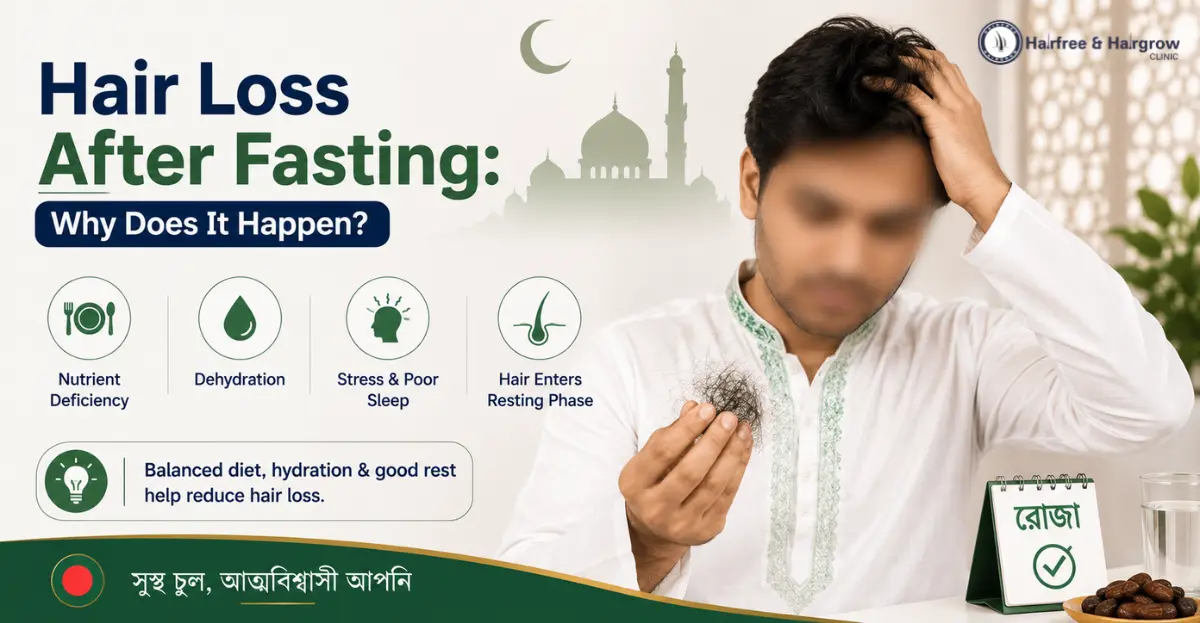
Hair loss after fasting may happen due to poor nutrition, dehydration, rapid weight loss, stress, or changes in sleep, not necessarily because of fasting itself.
During Ramadan, daily life changes for many people in Bangladesh, from when they eat and drink to when they sleep and go about their day. After Ramadan, some people may notice more hair on their pillow, in their comb, or in the shower and naturally wonder whether fasting is responsible.
The good news is that increased hair shedding does not always mean permanent hair loss. In many cases, it may be temporary and related to changes in nutrition, weight, stress, or the natural hair-growth cycle.
However, if hair loss continues, becomes more noticeable, or is accompanied by a receding hairline or thinning crown, it is important to identify the underlying cause rather than assuming that fasting is responsible.
Check Your Hair Transplant Cost Instantly
Table of Contents
Can Fasting Cause Hair Loss?
Fasting does not necessarily cause permanent hair loss. However, the way a person eats and lives during fasting can affect the normal hair-growth cycle.
During Ramadan, some people may unintentionally consume fewer calories or less protein than usual. Others may lose weight quickly, drink too little water between Iftar and Sehri, sleep irregularly, or experience increased physical and emotional stress.
These factors can sometimes contribute to increased hair shedding.
In other cases, the timing may simply be coincidental. A person may already have male pattern hair loss or another scalp condition, and the problem becomes more noticeable around the same time.
Why Does Hair Fall Increase After Fasting?
There are several possible reasons.
1. Not Getting Enough Protein
Hair is mainly made of a protein called keratin, so adequate protein is important for normal hair growth.
During Ramadan, meals can sometimes focus on fried foods, sweets, refined carbohydrates, and sugary drinks, while protein-rich foods get less attention.
Regularly including foods such as eggs, fish, chicken, lentils, beans, chickpeas, milk, yogurt, nuts, and seeds can help support a balanced diet.
2. Dehydration
During fasting hours, you cannot drink water. If you don’t drink enough between Iftar and Sehri, your overall fluid intake may be inadequate.
Dehydration is not usually the direct cause of permanent baldness, but adequate hydration supports overall health and scalp comfort.
Try to drink water regularly throughout the non-fasting period instead of trying to consume a large amount at one time.
3. Nutritional Deficiencies
A restricted or poorly balanced diet can sometimes result in nutritional deficiencies.
Low levels of nutrients such as iron, vitamin D, zinc, or inadequate protein intake may be associated with hair shedding in some people.
However, it is important not to assume that every case of hair loss is caused by a vitamin deficiency. Taking supplements without knowing whether you actually need them may not solve the problem.
If hair loss is persistent, a doctor or hair specialist can determine whether further evaluation or blood tests are appropriate.
4. Rapid Weight Loss
Some people lose weight quickly while fasting, particularly when their calorie intake drops significantly.
Rapid weight loss or other physical stress can trigger a temporary form of hair shedding known as telogen effluvium.
In this condition, more hairs than usual enter the resting phase of the hair cycle. The increased shedding may become noticeable later rather than immediately after the triggering event.
This is one reason why someone may notice increased hair fall even after Ramadan has ended.
5. Changes in Sleep and Daily Routine
Ramadan can significantly change sleeping patterns because of Sehri, Iftar, Taraweeh, work schedules, and late-night activities.
Poor or irregular sleep can add to physical stress and may make it harder to maintain healthy eating and lifestyle habits.
Sleep changes alone do not usually explain progressive baldness, but they can be one factor contributing to overall hair health.
Must Read: How to Sleep After a Hair Transplant
Why Am I Losing Hair After Ramadan If Fasting Has Already Ended?
This is a common concern.
Hair does not always respond immediately to a physical change. When the hair-growth cycle is disturbed by factors such as illness, significant stress, rapid weight loss, or inadequate nutrition, increased shedding can become noticeable weeks or even months later.
Therefore, hair loss noticed after Ramadan does not necessarily mean that something is currently going wrong.
The important question is
What happened to your body and lifestyle in the weeks or months before the hair shedding started?
Is Hair Loss After Fasting Temporary?
Sometimes it is, but not always.
If the shedding is related to a temporary factor such as rapid weight loss, nutritional problems, or physical stress, hair growth may improve once the underlying issue is corrected.
But fasting can also draw attention to an existing hair-loss problem.
For example, male pattern hair loss can gradually cause the following:
- Receding temples
- A widening or thinning crown
- Reduced density on the top of the scalp
- Progressive hairline changes
- Thinner and finer hairs over time
This type of hair loss usually needs a different approach from temporary shedding.
Telogen Effluvium or Male Pattern Hair Loss?
Knowing the pattern can provide useful clues.
Telogen Effluvium
You may notice:
- More hair falling during washing or brushing
- Increased hair on your pillow or clothing
- Hair shedding from different areas of the scalp
- Hair loss following stress, illness, rapid weight loss, or nutritional changes
Male Pattern Hair Loss
You may notice:
- A receding hairline
- Thinning at the temples
- Crown or vertex thinning
- Gradual loss of density
- A family history of baldness
Some people can also have both conditions at the same time.
That is why persistent hair loss should be properly assessed rather than automatically blamed on fasting.
How Can You Protect Your Hair During and After Fasting?
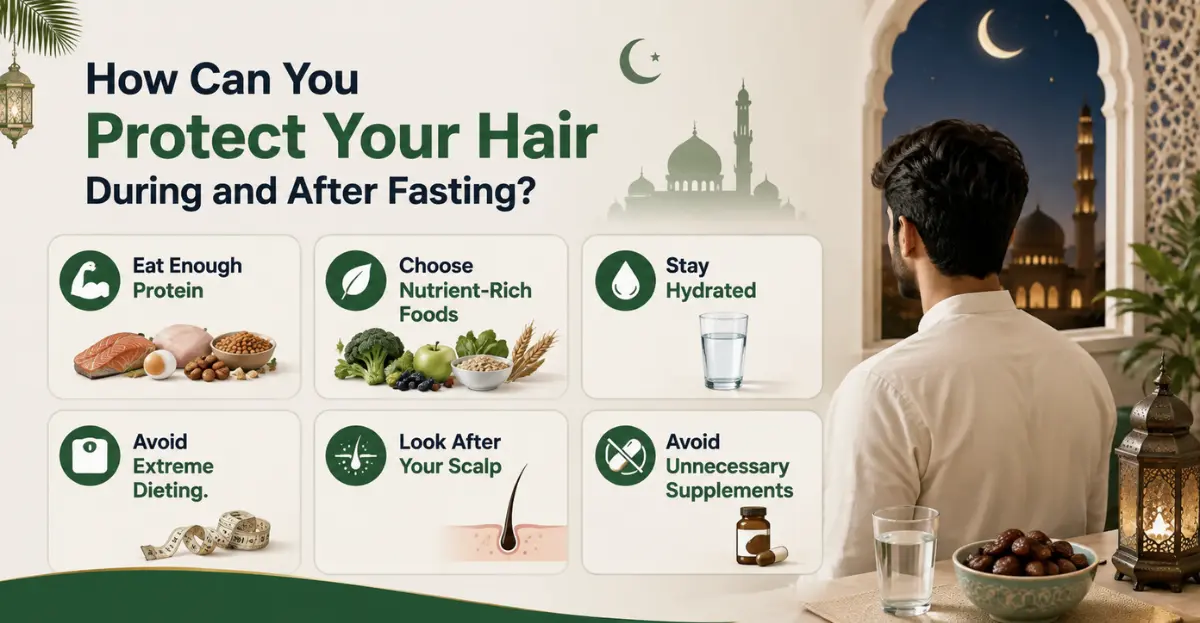
You do not need a complicated hair care routine. Focus on the basics.
Eat Enough Protein
Include protein-rich foods in your Iftar and Sehri meals, such as eggs, fish, chicken, lentils, beans, dairy products, nuts, and seeds.
Choose Nutrient-Rich Foods
Try to include vegetables, fruits, whole grains, and other nutrient-dense foods rather than relying mainly on fried foods and sweets.
Stay Hydrated
Drink water regularly between Iftar and Sehri.
Avoid Extreme Dieting.
If you want to lose weight during Ramadan, avoid crash diets and severe calorie restriction. Rapid weight loss can sometimes contribute to increased hair shedding.
Look After Your Scalp
If you have persistent dandruff, itching, redness, excessive oiliness, or scalp irritation, do not ignore it. A scalp problem may require specific treatment.
Avoid Unnecessary Supplements
Hair supplements are not a universal solution for hair loss. If a deficiency is suspected, professional evaluation can help determine what you actually need.
Can Vitamins Stop Hair Loss After Fasting?
Not in every case.
If hair loss is related to a genuine nutritional deficiency, correcting that deficiency may help. But vitamins cannot treat every type of hair loss.
For example, male pattern hair loss is primarily related to genetic and hormonal factors and may require specific medical treatment.
Taking large amounts of supplements without medical advice is also not recommended.
When Should You See a Hair Specialist?
Consider getting your hair loss evaluated if:
- Hair shedding continues for several weeks or months
- Your hairline is gradually receding.
- Your crown is becoming thinner.
- You can see more of your scalp through your hair.
- Hair loss is occurring in patches.
- You have severe dandruff, itching, or scalp inflammation.
- Hair loss is suddenly very heavy.
- You have a strong family history of baldness.
Early evaluation can help identify whether you are experiencing temporary shedding or a progressive hair-loss condition.
Hair Loss Treatment in Bangladesh
If your hair continues to fall after Ramadan, the most important step is to find the actual cause before choosing a treatment.
At Hair Free & Hair Grow Clinic Bangladesh, patients can receive professional assessments for hair loss, thinning hair, scalp conditions, and baldness. Depending on the individual diagnosis, treatment options may include medical hair-loss management, scalp care, PRP therapy, or hair transplantation where appropriate.
Not everyone with post-fasting hair shedding needs a hair transplant. A proper assessment can help determine whether the problem is temporary or whether there is an underlying condition that needs longer-term treatment.
For people searching for the best hair clinic in Bangladesh, it is important to choose a clinic that focuses on diagnosis, realistic expectations, and an individualized treatment plan rather than recommending the same treatment to everyone.
If you are looking for hair loss treatment in Bangladesh, Hair Free & Hair Grow Clinic Bangladesh can help you understand the possible cause of your hair loss and discuss suitable treatment options.
Frequently Asked Questions
Does fasting cause permanent hair loss?
Usually, fasting itself does not cause permanent baldness. However, inadequate nutrition, rapid weight loss, stress, or other factors associated with fasting may contribute to temporary hair shedding.
Why does my hair fall after Ramadan?
Changes in diet, weight, sleep, stress, hydration, and the natural hair-growth cycle may contribute to increased shedding. The factor that triggered the shedding may have occurred weeks or months earlier.
Should I take biotin for hair loss after fasting?
Biotin is not a universal treatment for hair loss. It is most useful when there is a genuine deficiency or a specific medical reason for supplementation.
Does dehydration cause baldness?
Dehydration is not generally considered a direct cause of permanent baldness. However, maintaining adequate fluid intake is important for overall health and scalp comfort.
When should I seek hair loss treatment in Bangladesh?
If hair loss is persistent, progressive, sudden, patchy, or accompanied by scalp symptoms, it is worth consulting a qualified hair specialist or dermatologist to identify the cause.
Final Thoughts
Seeing more hair fall after Ramadan can be worrying, but it doesn’t automatically mean you are becoming permanently bald.
Your diet, protein intake, hydration, weight changes, sleep, stress levels, and existing hair-loss pattern can all play a role.
If the shedding continues, worsens, or is accompanied by a receding hairline or thinning crown, don’t just wait and hope it will stop. Finding the cause early can make it easier to choose the right treatment.
For professional guidance, Hair Free & Hair Grow Clinic Bangladesh provides hair-loss assessment and treatment options for people experiencing hair fall, thinning, and baldness