

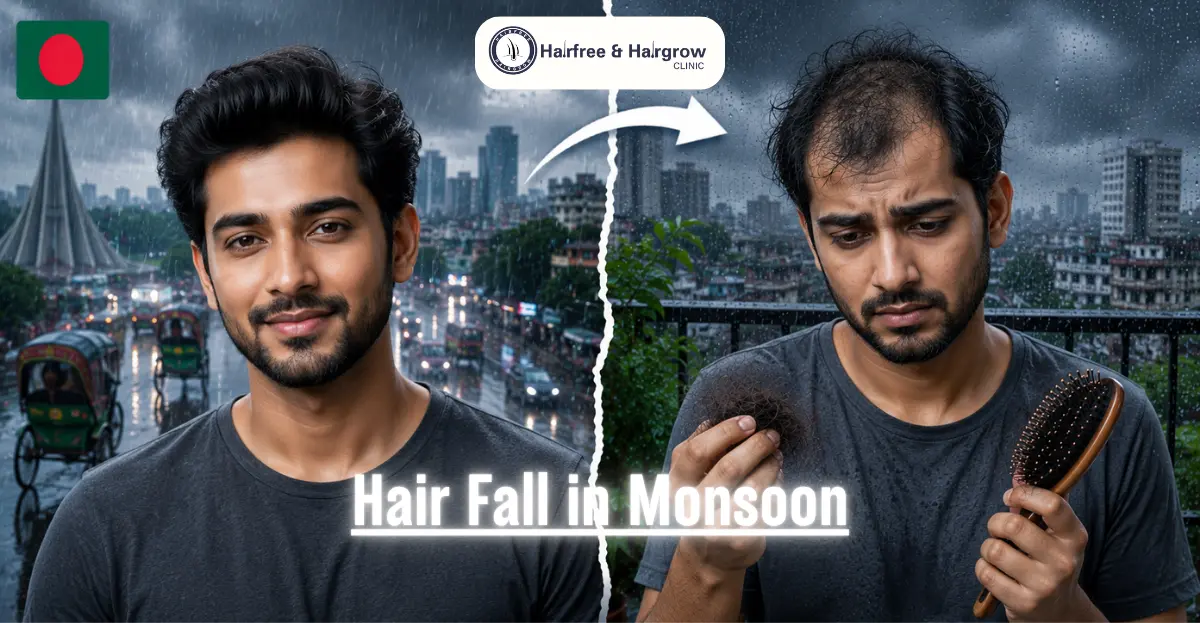
The arrival of the monsoon season brings much-needed relief from Bangladesh’s intense summer heat. While the cool rain and pleasant weather are refreshing, the rainy season often creates new challenges for your hair and scalp. Increased humidity, frequent rainfall, sweat, and scalp infections can all contribute to monsoon hair fall, leaving many people wondering whether their hair loss is normal.
Bangladesh experiences one of the longest and wettest monsoon seasons in South Asia, typically from June to October. During these months, humidity levels often exceed 80%, creating the perfect environment for frizzy hair, dandruff, fungal infections, and excessive hair shedding.
If you’ve noticed more hair strands on your pillow, comb, or bathroom floor, you’re not alone. Many people experience hairfall in rainy season, but the good news is that seasonal hair loss is usually temporary and manageable with the right care.
In this guide, you’ll learn why hair fall increases during monsoon, how to prevent hair fall in rainy season, the best hair care routine to follow, and which treatments actually work if your hair loss becomes severe.
Check Your Hair Transplant Cost Instantly
Table of Contents
Why Does Hair Fall Increase During Monsoon?
It is completely normal to lose around 50 to 100 hair strands daily as part of the natural hair growth cycle. However, during the monsoon season, many people notice increased shedding.
The primary reason is the combination of high humidity, excessive sweating, pollution, and scalp infections. These factors weaken the hair shaft and affect scalp health, making hair more prone to breakage and shedding.
Humidity also causes the hair shaft to absorb moisture from the air. This changes the hair’s structure, making it frizzy, weak, and easier to break while combing or styling.
Although seasonal shedding is common, excessive hair loss lasting more than two to three months should never be ignored, as it may indicate an underlying medical condition.
Common Causes of Hair Fall in Rainy Season
1. High Humidity
Bangladesh’s humid climate is one of the biggest reasons behind monsoon hair fall. Excess moisture weakens the hair cuticle, causing frizz, split ends, and increased breakage.
2. Scalp Sweat and Oil Build-up
Hot and humid weather increases sweating. Sweat mixes with oil, dust, and pollution, clogging hair follicles and irritating the scalp.
If the scalp isn’t cleaned regularly, it can lead to dandruff and increased hair shedding.
3. Fungal and Scalp Infections
The rainy season creates the perfect environment for fungal growth.
Common scalp conditions during monsoon include:
- Dandruff
- Seborrheic dermatitis
- Fungal scalp infections
- Itchy scalp
An unhealthy scalp can weaken hair roots and contribute to seasonal hair loss.
4. Rainwater and Pollution
Rainwater isn’t always clean. In urban areas, it may contain pollutants, dust, and acidic particles that can irritate the scalp.
If your hair gets wet in the rain, rinse it with clean water as soon as possible.
5. Poor Nutrition
Many people consume fewer fresh fruits and vegetables during the rainy season, leading to deficiencies in protein, iron, zinc, and vitamins essential for healthy hair growth.
6. Stress and Lifestyle Changes
Seasonal changes, disrupted routines, lack of exercise, and increased stress can also contribute to temporary hair shedding.
How to Prevent Hair Fall in Rainy Season
If you’re wondering how to prevent hair fall in the rainy season, the answer lies in maintaining a healthy scalp and following a consistent hair care routine.
Wash Your Hair Regularly
Wash your hair two to three times a week using a mild sulfate-free shampoo to remove sweat, dirt, and excess oil.
Avoid overwashing, as it can strip your scalp of natural oils.
Keep Your Scalp Dry
Never leave your scalp damp for long periods.
After washing your hair or getting caught in the rain, dry it gently using a microfiber towel.
Avoid Tight Hairstyles
Tight ponytails and buns create tension on the hair roots, increasing breakage.
Choose loose hairstyles during the monsoon season.
Use a wide-tooth comb.
Wet hair is more fragile than dry hair.
Instead of brushing aggressively, use a wide-tooth comb to gently remove tangles.
Limit Heat Styling
Frequent use of hair dryers, straighteners, and curling irons weakens already fragile hair.
Whenever possible, let your hair air dry naturally.
Best Hair Care Routine During Monsoon
A simple routine can significantly reduce hair fall in the rainy season.
Morning
- Comb hair gently.
- Apply a lightweight anti-frizz serum if needed.
- Cover your hair while traveling in heavy rain.
Hair Wash Days
- Use a gentle shampoo.
- Follow with a nourishing conditioner on the hair lengths.
- Dry your scalp completely before tying your hair.
Weekly Care
- Apply warm coconut or argan oil once a week.
- Use a deep conditioning hair mask.
- Massage your scalp gently to improve blood circulation.
Foods That Help Reduce Monsoon Hair Fall
Healthy hair starts with proper nutrition.
Include these foods in your diet:
- Eggs
- Fish
- Lentils
- Spinach
- Pumpkin seeds
- Almonds
- Walnuts
- Citrus fruits
- Yogurt
- Sweet potatoes
Drink at least 2 to 3 liters of water daily to keep your scalp hydrated.
Hair Fall Treatments That Actually Work
If home remedies aren’t enough and you’re searching for how to stop hair fall in the rainy season, professional treatment may be necessary.
A dermatologist or hair restoration specialist can identify the root cause and recommend the most suitable option.
Common treatments include:
PRP Therapy
Platelet-Rich Plasma (PRP) uses your own blood platelets to stimulate dormant hair follicles and encourage natural hair growth.
GFC Therapy
Growth Factor Concentrate (GFC) Therapy delivers concentrated growth factors directly to the scalp, helping strengthen existing hair and reduce shedding.
Mesotherapy
Mesotherapy treatment delivers vitamins, minerals, and nutrients directly into the scalp to nourish hair follicles.
Medications
Depending on the diagnosis, your doctor may recommend FDA-approved treatments or supplements to address nutritional deficiencies and support healthy hair growth.
Hair Transplant
If hair loss is caused by hereditary baldness and permanent follicle damage, a hair transplant may offer a long-term solution by restoring natural hair density.
When Should You See a Hair Specialist?
Seasonal shedding usually improves once the weather changes. However, you should consult a specialist if:
- Hair fall continues for more than three months.
- You notice bald patches.
- Your hairline is receding.
- Hair is becoming noticeably thinner.
- You experience severe dandruff, itching, or scalp infections.
- Hair loss is affecting your confidence or daily life.
Early diagnosis often leads to more effective treatment.
Why Choose Hairfree & Hairgrow Hair Transplant Clinic in Bangladesh?
If you’re experiencing persistent hair loss beyond the monsoon season, seeking professional guidance can make a significant difference.
Hairfree & Hairgrow Hair Transplant Clinic, Bangladesh, offers comprehensive hair restoration services tailored to individual needs. Their team evaluates the underlying cause of hair loss before recommending a personalized treatment plan.
The clinic provides advanced hair restoration solutions, including:
- Hair Transplant
- PRP Therapy
- GFC Therapy
- Mesotherapy
- Scalp Analysis
- Hair Loss Consultation
- Personalized Hair Care Plans
Whether you’re dealing with seasonal hair shedding, pattern baldness, or thinning hair, early consultation can help preserve existing hair and improve long-term outcomes.
Frequently Asked Questions
1. Is monsoon hair fall normal?
Yes. Mild seasonal hair shedding is common during the rainy season due to humidity, scalp oil build-up, and weather changes.
2. How to prevent hair fall in the rainy season?
Keep your scalp clean, use a mild shampoo, avoid tight hairstyles, eat a protein-rich diet, stay hydrated, and protect your hair from rainwater.
3. How to stop hair fall in the rainy season naturally?
You can reduce seasonal hair loss by maintaining scalp hygiene, oiling your hair once a week, avoiding excessive heat styling, and eating foods rich in protein, iron, zinc, and biotin.
4. Does rainwater cause hair fall?
Rainwater itself does not directly cause hair loss, but pollutants and contaminants in rainwater can irritate the scalp if not washed off promptly.
5. When should I consult a hair specialist?
If hair loss persists for more than two to three months, worsens rapidly, or is accompanied by bald patches or scalp problems, consult a qualified hair specialist.
Conclusion
While monsoon hair fall is a common concern in Bangladesh due to prolonged humidity and heavy rainfall, it is often temporary and manageable with proper hair care, nutrition, and scalp hygiene. By following a consistent routine and addressing problems early, you can significantly reduce hair fall in rainy season and maintain healthier, stronger hair.
If you’ve tried home remedies and are still wondering how to stop hair fall in rainy season, it’s time to seek professional advice. Early diagnosis can help identify the underlying cause and prevent further hair loss. Clinics like Hairfree & Hairgrow Hair Transplant Clinic Bangladesh provide advanced diagnostic services and evidence-based treatments, helping patients regain not only their hair but also their confidence.