
Not satisfied with your first hair transplant? A second procedure can fix it, but only if done correctly.
Many patients in Dhaka search for solutions after low-density, patchy growth, or continued hair loss. The good news is that a second hair transplant is common and can deliver strong results when properly planned.
Book your hair analysis in Dhaka today and find out if you are eligible for a second transplant.
Table of Contents
What Is a Second Hair Transplant?
A second hair transplant is a follow-up hair restoration procedure performed after your first surgery to improve or correct results.
It is commonly done to:
- Increase density in transplanted areas
- Fix patchy or uneven growth
- Correct unnatural hairline design
- Cover new bald areas caused by ongoing hair loss
In many cases, it is part of a long-term treatment plan rather than a failure.
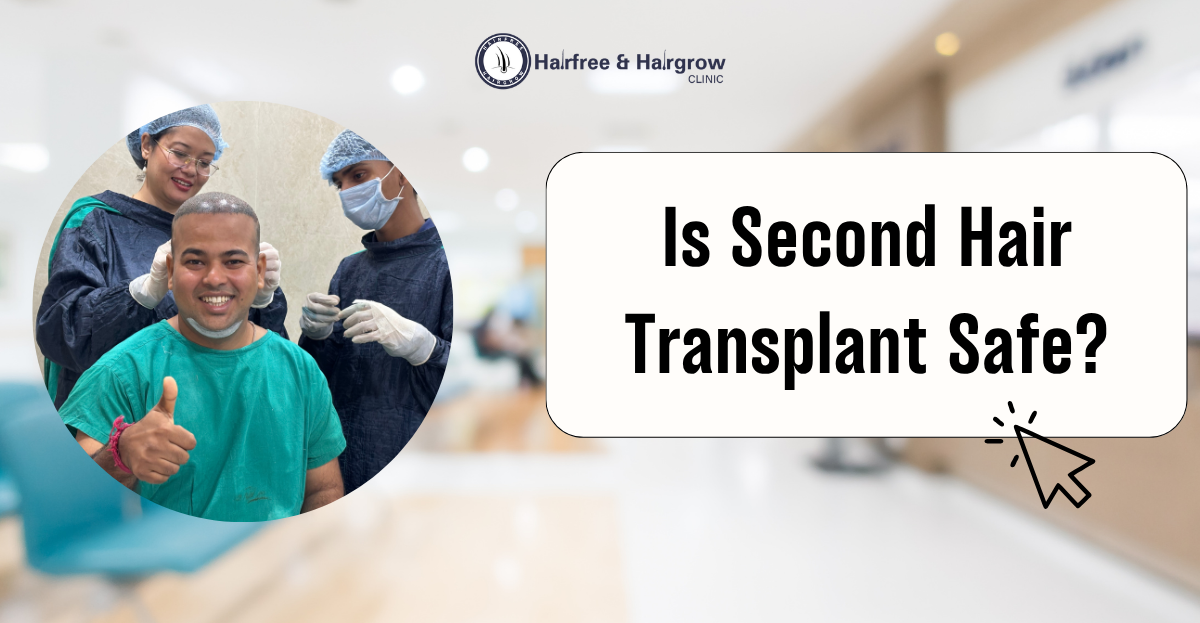
Is a Second Hair Transplant Safe?
A second hair transplant is safe when proper medical conditions are met.
It is considered safe if:
- Your donor area has enough remaining grafts.
- At least 12 to 18 months have passed since your first transplant.
- Your scalp has fully healed
- There is no infection or severe scarring.
- A detailed medical evaluation is performed.
However, risks increase if the first procedure was poorly done or if the donor area is overused. This makes expert planning essential.
Get a professional assessment in Dhaka before deciding your next step.
When Do You Need a Second Hair Transplant?
You may need a second procedure if:
- Low Density After First Transplant
Large bald areas often require more than one session for full density.
- Ongoing Hair Loss
Conditions like androgenetic alopecia continue even after a transplant. Transplanted hair remains stable, but natural hair may keep thinning.
- Failed or Poor Results
Patchy growth, unnatural hairline, or poor density may require correction.
- Planned Multi-Session Treatment
In advanced baldness classified under the Norwood Scale, surgeons often divide treatment into multiple sessions.
Check: Hair Transplant Cost Calculator | Hair Graft Calculator
When You Should Avoid a Second Hair Transplant
You may not be eligible if:
- Your donor area is already overharvested.
- Hair loss is still rapidly progressing.
- You have unrealistic expectations about density.
In such cases, stabilizing hair loss with treatments like finasteride and minoxidil is important before considering another surgery.
Can You Get a Second Hair Transplant After 6 Months?
In most cases, no.
At 6 months, your hair is still in the early growth phase, and results cannot be accurately judged. The scalp is also still recovering.
Recommended waiting time:
12 to 18 months
This ensures:
- Complete healing
- Clear visibility of final results
- Better planning for the next procedure
How to Fix a Failed Hair Transplant
A failed transplant can be corrected with the right approach.
Signs of a failed hair transplant:
- Very low density
- Patchy or uneven growth
- Poor hairline design
- No visible improvement after 12 to 15 months
Solution:
- Wait for complete healing
- Get a second opinion
- Plan a repair or corrective hair transplant
Consult a hair transplant specialist in Dhaka to evaluate your results and plan correction safely.
Second Hair Transplant Results Timeline
- Days 1 to 14
Healing phase with redness, swelling, and scabs
- Weeks 2 to 8
Shedding phase (shock loss), which is normal
- Months 3 to 6
Early hair growth begins.
- Months 9 to 14
Visible improvement in density and shape
- Months 14 to 18
Final results with full thickness and natural appearance
Cost of Second Hair Transplant in Bangladesh (Dhaka)
Hair transplant costs in Bangladesh are more affordable compared to Western countries, while maintaining high standards in reputable clinics.
Average cost in Dhaka:
- Mild top-up: BDT 50,000 to BDT 90,000
- Moderate session: BDT 90,000 to BDT 150,000
- Repair procedures: BDT 120,000 to BDT 250,000
Factors affecting cost:
- Number of grafts required
- Technique used, such as FUE hair transplant, FUT hair transplant, or DHI hair transplant
- Surgeon experience
- Clinic reputation
Get an exact cost estimate with a personalized consultation in Dhaka.
Donor Area: The Most Important Limiting Factor
The donor area is finite and does not regenerate after extraction.
Poor planning can lead to the following:
- Visible thinning in the donor area
- Limited options for future procedures
Important questions to ask:
- How many grafts were used previously
- How many grafts are still available?
- Whether additional sources like body hair can be considered
A second transplant must always prioritize long-term donor preservation.
Why Choose Hairfree and Hairgrow Hair Transplant Clinic Bangladesh, Dhaka, for Your Second Transplant?
Choosing the right clinic is critical, especially for corrective or repeat procedures.
Key advantages:
- Over 12+ years of experience in hair restoration
- Strong expertise in second and repair hair transplants
- Advanced techniques, including FUE, FUT, and DHI
- Detailed donor area analysis before surgery
- Natural and customized hairline design
- Transparent consultation process
- Proven results across India and Bangladesh
The primary focus of the Hairfree And Hairgrow Clinic Bangladesh is to deliver safe, natural-looking results while protecting your long-term donor supply.
Frequently Asked Questions
1. Is a second hair transplant safe?
Yes, it is safe when the donor area, timing, and scalp health are properly evaluated.
2. How long should I wait between two hair transplants?
At least 12 to 18 months is recommended.
3. Can a failed hair transplant be fixed?
Yes, most failed transplants can be improved with a repair procedure.
4. How many grafts are needed for a second transplant?
It depends on your hair loss pattern and donor availability.
5. Does a second transplant have a lower success rate?
No, success rates are similar when performed correctly by an experienced surgeon.
Conclusion
A second hair transplant can significantly improve your results when done at the right time with proper planning.
You should consider it if:
- Your donor area supports another procedure
- Enough time has passed since your first transplant.
- Your hair loss pattern is stable.
You should avoid it if:
- Donor supply is limited.
- Hair loss is still progressing rapidly.
- Expectations are unrealistic.