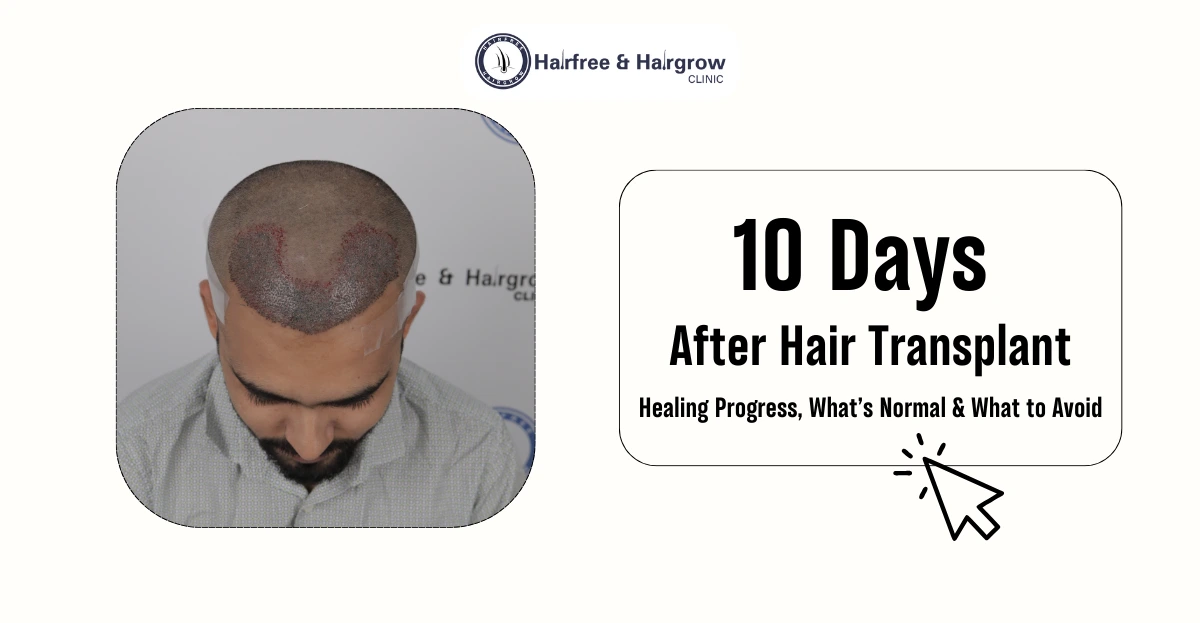
Reaching 10 days after a hair transplant is an important recovery milestone. By this stage, most patients feel more comfortable, daily routines become easier, and the scalp enters a more stable healing phase.
Many patients at Hair Free and Hair Grow Clinic Bangladesh ask similar questions at this point:
- Are scabs supposed to be gone by day 10?
- Is redness still normal?
- Can I wash my hair normally now?
- Is my transplant healing properly?
This guide explains what to expect 10 days after a hair transplant, based on real patient recovery patterns, Bangladesh’s climate, and medically approved aftercare practices.
Table of Contents
What Happens 10 Days After a Hair Transplant?
By day 10, healing is progressing well.
Most patients experience:
- No pain or only mild sensitivity
- Swelling is almost completely gone
- Transplanted grafts are becoming more secure
- Scabs loosening or already removed
- Improved comfort during daily activities
At this stage, doctors carefully assess recovery because the first 10 days play a key role in long-term results.
Hair growth has not started yet, which is completely normal. The body focuses on healing first.
How Should Your Scalp Look 10 Days After a Hair Transplant?
Recipient Area (Transplanted Area)
A healthy recipient area may show:
- Minimal or no scabs
- Mild pink or light redness
- Firm, stable grafts
- Slight itching or tightness
This appearance is normal during recovery.
Donor Area (Back or Side of Head)
By day 10:
- Extraction marks are mostly healed.
- Skin may appear light pink or slightly dry.
- No open wounds should remain
- Discomfort is minimal or absent.
Modern FUE and DHI techniques allow faster healing with minimal visible scarring.
Are Scabs Normal 10 Days After Hair Transplant?
Yes. However, by day 10, most scabs should be gone or nearly gone.
Typical scab timeline:
- Start loosening around day 7
- Mostly fall off by day 10
- Occasionally, remain until day 12–14
Important Aftercare Advice
- Do not scratch scabs.
- Do not force removal.
- Avoid oils, herbal products, or home remedies.
Gentle washing allows scabs to fall naturally without harming grafts.
Can You Wash Hair Normally After 10 Days?
Yes. Washing becomes easier and more comfortable at this stage.
Recommended Washing Method
- Use a mild or prescribed shampoo
- Wash once daily
- Use fingertips gently (no nails).
- Normal water pressure is acceptable.
- Pat dry with a soft towel
Avoid aggressive rubbing or scrubbing.
Is Redness Normal 10 Days After Hair Transplant?
Yes. Mild redness is still common, especially in:
- Fair or sensitive skin
- FUE or DHI procedures
For most Bangladeshi patients, redness gradually fades within 2–4 weeks.
Contact Your Doctor If Redness:
- Increases instead of fading
- Comes with pain or discharge
- Spreads beyond the treated area
Early attention helps prevent complications.
Can You Touch the Transplanted Area After 10 Days?
Grafts are stronger but still require care.
You may:
- Touch gently during washing
You should avoid:
- Scratching
- Rubbing
- Pressing the scalp forcefully
A full scalp massage should only be done after medical approval.
Going Outside 10 Days After Hair Transplant
You may go outside, but precautions are important due to heat, humidity, dust, and pollution.
Recommended precautions:
- Avoid direct sunlight
- Wear a loose, clean cap if needed.
- Avoid heavy sweating
- Keep outings short
These steps help reduce irritation and redness.
Can You Exercise 10 Days After a Hair Transplant?
Light walking is fine, but avoid:
- Gym workouts
- Running
- Weight lifting
- Swimming
Sweating can irritate healing skin. Full exercise is usually safe after 14 days, based on medical advice.
Sleeping Position After 10 Days
Sleeping becomes more comfortable after one week.
Still recommended:
- Sleep on your back or side
- Use clean pillow covers.
- Avoid direct pressure on the transplanted area.
Good sleep supports blood circulation and healing.
Hair Shedding After 10 Days: Should You Worry?
Shedding may begin soon.
Important points:
- Shedding usually starts between 2 and 4 weeks.
- This phase is known as shock loss.
- Only hair shafts fall out
- Grafts remain securely in the scalp
- New hair will regrow in the coming months.
This is a normal and temporary phase.
What Not to Do 10 Days After Hair Transplant
Avoid:
- Scratching or picking the scalp
- Applying oils, gels, or styling products
- Smoking or alcohol
- Tight helmets or caps
- Hair coloring or chemical treatments
Avoiding these helps protect graft survival.
Signs Your Hair Transplant Is Healing Well
Positive signs include:
- Minimal or no pain
- No signs of infection
- Scabs falling naturally
- Redness gradually reducing
- The donor area is clean and healed
If you notice anything unusual, consult your surgeon.
What to Expect After Day 10
In the weeks ahead:
- Redness continues to fade.
- Temporary shedding may begin
- Scalp feels more normal
- New hair growth starts around 3–4 months.
- Final results appear within 9–12 months
Patience and proper care are essential.
Conclusion
Being 10 days after a hair transplant is a reassuring stage of recovery. Most discomfort has resolved, scabs are clearing, and grafts are becoming stable. Mild redness and itching are normal and temporary.
With proper aftercare and professional guidance, patients can confidently move toward strong, natural hair growth.
Recovery timelines may vary. Always follow your surgeon’s specific instructions.
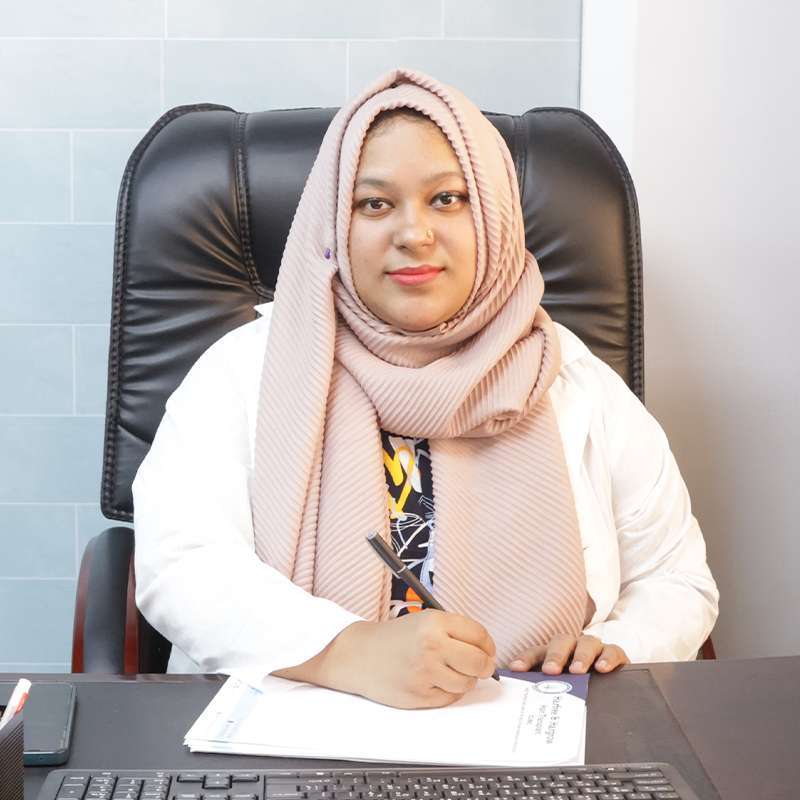
Reviewed By
Medical Officer & Hair Transplant Surgeon
Dr. Nazmin Sultana Nipa is a distinguished hair transplant doctor in Bangladesh, known for her advanced skills in hair restoration. As a Medical Officer and Hair Transplant Surgeon, Dr. Nipa combines her extensive experience in the field with a focus on transparency and patient-centered care.
Disclaimer
We’ve made all possible efforts to ensure that the information provided here is accurate, up-to-date and complete, however, it should not be treated as a substitute for professional medical advice, diagnosis or treatment. See Detailed Disclaimers Here.